
REVIEW · DEAD SEA TOURS
Jerusalem & Bethlehem Full-Day Tour from Amman or Dead Sea
Jerusalem in one day can feel unreal, and this tour does it without rushing you into oblivion. I like the Mount of Olives panoramas plus its mix of Christian tradition and views, and I also like the Old City route that actually connects the big sites in a logical walking flow. The main thing to consider is that many of the most important stops are religious and crowded, and entry includes no admission tickets, so you’ll want to budget time and expenses accordingly.
You get private transportation in a modern air-conditioned vehicle with an English-speaking driver, plus free Wi-Fi and mineral water during the ride. That’s a big deal when you’re spending 11 to 12 hours on the clock, including time for getting to and from the border area.
One more practical note I would plan around: this day can involve more than one driver during the border process, so keep your passport details handy and stay flexible with timing.
In This Review
- Key things I’d pay attention to
- How this full-day route actually works (and why it makes sense)
- Mount of Olives: the best first stop for both views and meaning
- Temple Mount and Haram al-Sharif: iconic, sensitive, and not a quick photo stop
- Church of the Holy Sepulchre: where your day’s spiritual walking route ends
- Via Dolorosa: why the route matters as much as the destination
- Tower of David and Mount Zion: a calmer change of pace from the Old City crush
- Tower of David Museum stop
- Mount Zion and the Last Supper Room area
- Walking Old City walls: a smart way to see the city without getting stuck in it
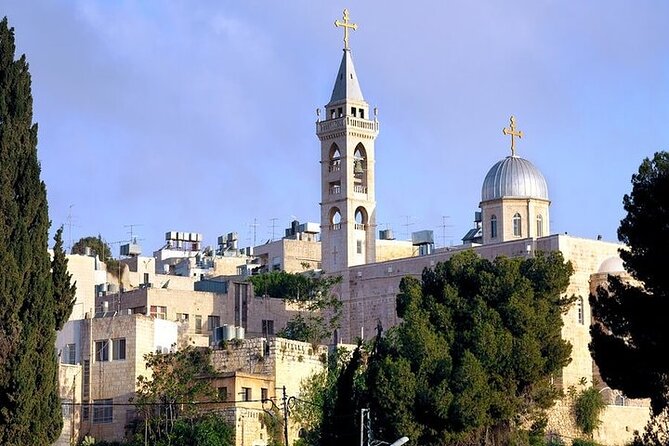
- Bethlehem: Church of the Nativity plus nearby anchors like Rachel’s Tomb
- Tower of time and value: what $559.99 buys you, and what it doesn’t
- Border day reality: permits, waiting time, and why flexibility helps
- Who should book this tour, and who should skip it
- Should you book it?
- FAQ
- How long is the Jerusalem and Bethlehem full-day tour?
- What’s included in the price?
- Are admission tickets included for the sights?
- Is a guide included?
- Do I get pickup?
- What document do I need to send before the border crossing?
- Can I cancel and get a refund?
Key things I’d pay attention to
- English-speaking driver plus modern air-conditioned transport to reduce the stress of a long day
- Mount of Olives viewpoints, including the Church of the Ascension and the nearby Church of the Pater Noster area
- The Old City connection from entry through the Zion Gate to the Western Wall, Via Dolorosa, and the Church of the Holy Sepulchre
- Holy Sepulchre timing reality since the last Stations of the Cross are inside this complex and it can be busy
- Tower of David and Mount Zion as your historical and spiritual palate shift from the busiest streets
- Bethlehem’s Church of the Nativity plus nearby historic religious stops, with Bethlehem admission listed as free
Other ways down to the salt shore
How this full-day route actually works (and why it makes sense)
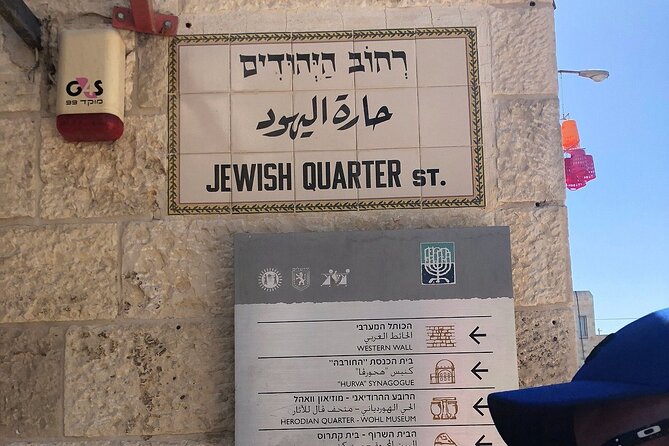
This is built as a long but structured day: you start with viewpoints and major religious landmarks above Old Jerusalem, then move into the walled Old City for the heavy hitters, and finish with Bethlehem. The flow matters. If you try to piece this together yourself, you spend a lot of time just figuring out where to start, how to cross the border efficiently, and which areas are walkable together.
Your vehicle is set up for comfort, and you get free Wi-Fi and mineral water on board. That sounds like a small perk until you remember this is an all-day outing, and the sites you care about most are spread across different elevations and neighborhoods.
The day is also clearly designed for people who want a curated route without the workload. You’re not driving, you’re not hunting for parking, and you’re not spending your energy on logistics when you’d rather spend it taking in the views and architecture.
One caution. Several stops list admission tickets as not included, and the most iconic sacred sites can have their own timing rules and crowd patterns. I’d come with a simple mindset: you’re here for the experience and the big landmarks, not for a museum-style, fully guided walkthrough at every stop.
Mount of Olives: the best first stop for both views and meaning
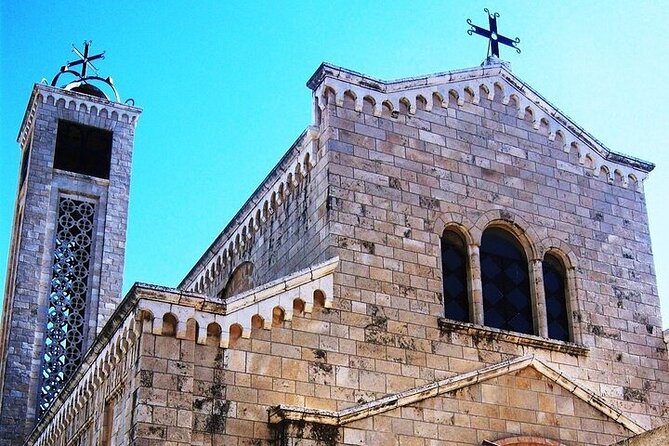
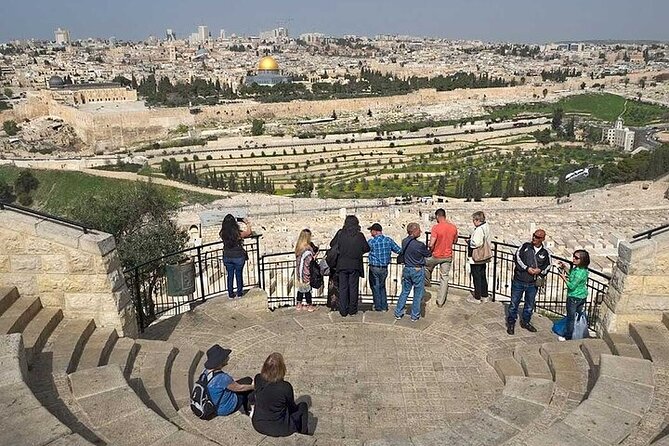
Mount of Olives is a smart opening move. You get the high-ground first, which helps you understand the city’s layout before you get swallowed by the Old City streets.
This hill is loaded with religious significance. Christian tradition connects the area to the Resurrection story arc, including the idea of Jesus’ ascension to heaven after the crucifixion and resurrection. The hill is also associated with the Last Judgment beliefs for Christian visitors, and it’s home to an old, still-used cemetery that helps this place feel lived-in rather than staged.
Practically, I like that the tour hits two specific anchors here:
- The Church of the Ascension, dating from 1910, which is noted as offering the best views across Jerusalem.
- The nearby Church of the Pater Noster, built by tradition next to where Jesus instructed his disciples.
Even if your faith ties are light, the view alone is worth treating this as a “stop, breathe, and orient yourself” moment. It’s also the kind of place where you’ll notice how the city layers together, which makes the later Old City scenes click more.
The potential drawback? The time here is listed as about 1 hour, which means you’ll want to decide early whether your priority is quiet viewing or more wandering around multiple points.
Temple Mount and Haram al-Sharif: iconic, sensitive, and not a quick photo stop
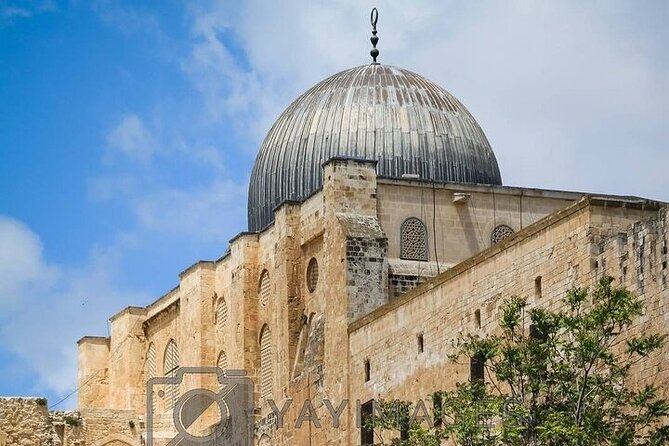
Next is Temple Mount, also known as Haram al-Sharif. This area is important to multiple faiths, and the tour description doesn’t hide that it’s also a site with contention over ownership. That matters because it changes your expectations. This is not a neutral “sight” like a stadium or a palace garden. It’s a living religious space.
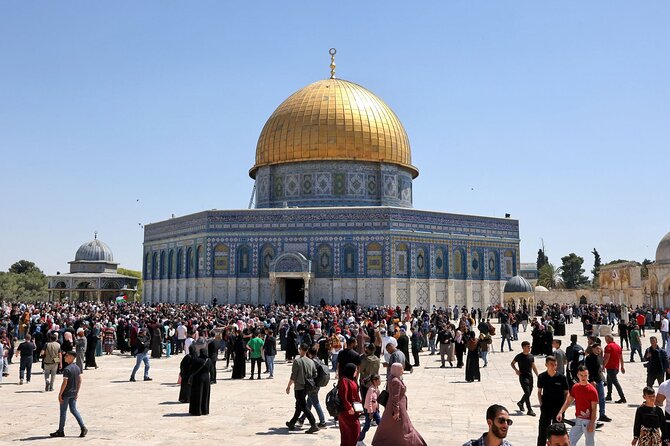
You’ll see the plaza centered around the Dome of the Rock, which is one of Jerusalem’s most recognizable landmarks. Beneath it, the sacred stone is described as a place both Jews and Muslims believe is linked to Abraham’s sacrifice story.
From a visitor standpoint, the main value of this stop is context. In one place, you get Abraham, Solomon, and Muhammad connected to the site through tradition, which helps explain why this area is emotionally charged for so many people.
The watch-out is simple: because admission is not included here (and time is about 1 hour), plan for the fact that you may spend more time in queueing or observing rules than you’d like. If you’re the type who needs lots of close-up exploring, this may feel tight.
Church of the Holy Sepulchre: where your day’s spiritual walking route ends
The Church of the Holy Sepulchre is Jerusalem’s holiest site for many Christian pilgrims. The tour frames it as built on the site of Jesus’ crucifixion, and it gives you a short historical thread: Saint Helena and Constantine the Great are tied to the selection of the site, the original church dates to 335 CE, it was destroyed in 1009, and the grand church you see now traces to the 11th century.
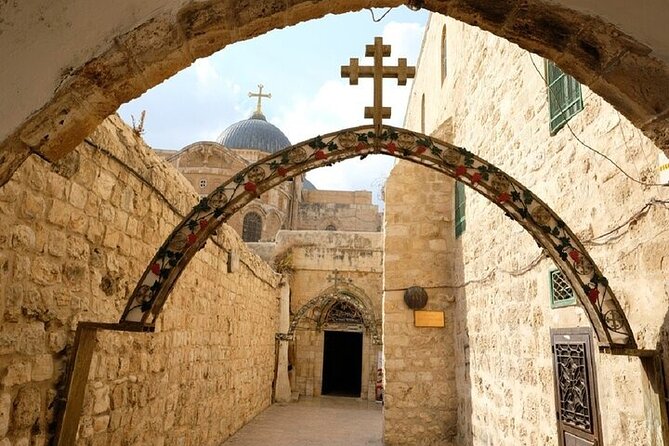
Inside, you’re promised an opulent religious interior, and this is also where the Via Dolorosa pilgrimage ends. The tour notes that the last five Stations of the Cross are within the church complex.
So what should you expect in your actual visit?
- If you’re walking the Stations theme, this stop gives that story arc a closing point.
- If you’re more into architecture, this is still a standout because it’s centuries layered into one space.
The drawback is crowd pressure. The church is described as often heaving with pilgrims. Even with a full hour, you may get a “see, then keep moving” experience rather than a slow, reflective one. I’d come prepared for that and focus on the big moments: the setting, the Stations connection, and the sheer density of holy symbolism in one place.
- Petra Day Tour from Dead Sea
★ 5.0 · 6 reviews - Jerusalem & Bethlehem Full-Day Tour from Amman or Dead Sea
★ 5.0 · 5 reviews - Petra Private Transfer to or from Dead Sea
★ 5.0 · 5 reviews - Transfer From Dead Sea To Petra
★ 5.0 · 4 reviews - Amman Airport Pickup Or Drop off -To Or From Dead Sea
★ 5.0 · 4 reviews
Via Dolorosa: why the route matters as much as the destination
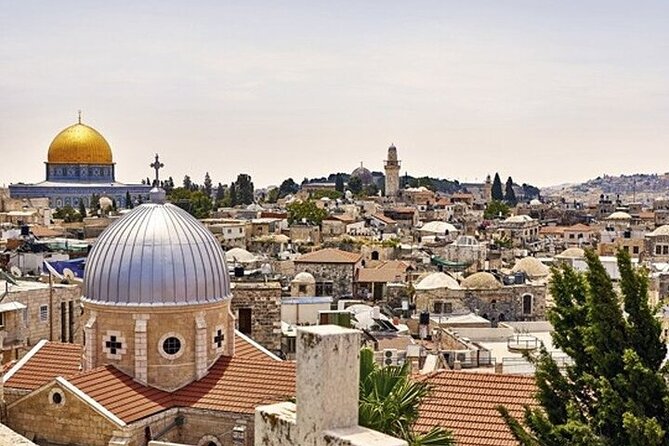
Between the Temple area and the Holy Sepulchre, you’ll walk the Way of the Cross, also known as Via Dolorosa. The tour explains the route follows Jesus bearing the cross after condemnation, marked by fourteen Stations. Some stations tie to Gospel accounts, and others are based on tradition.
What I like about doing this with the route planned for you is that you’re less likely to miss the “shape” of the walk. The described path starts on Via Dolorosa Street near the intersection with Al-Wad Street, then moves through a set of turns to reach the Church of the Holy Sepulchre at the ninth station, where the last five stations fall.
There’s also a note about Fridays: if you’re here on a Friday, you can join a procession along the route led by the Italian Franciscan monks. That detail can make your day feel more alive, but it also implies extra crowding. If that matters to you, treat Friday as a “commit to the experience” day, not a “move fast” day.
Admission is not listed as included for this stop, but the walking portion itself is the point. Plan on about 1 hour for your segment, and wear shoes that can handle uneven stone and thick foot traffic.
Tower of David and Mount Zion: a calmer change of pace from the Old City crush
After you hit the major Old City icons, the tour adds a nice shift: Tower of David and then Mount Zion.
Tower of David Museum stop
The tour calls it the Citadel, popularly known as the Tower of David, but it also explains the name doesn’t connect to David historically. It was erected by King Herod around 24 BCE to protect the palace he built. It also walks you through how the site changed hands, from Romans after Titus’ conquest in 70 CE to later rebuilds by Crusaders, Mamelukes, and Ottomans.
You’ll see what’s described as the 14th-century building on foundations of the original Phasael Tower, and inside you can visit the Tower of David Museum, which relays the story of Jerusalem with archaeological exhibits.
Time here is short, about 5 minutes in the schedule, and admission is not included. So I’d treat Tower of David as a “quick hit” unless you decide to spend extra on the museum beyond the scheduled moment.
Mount Zion and the Last Supper Room area
Then comes Mount Zion, right south of the Zion Gate. This stop is valuable because it expands your view of Jerusalem beyond the Old City streets. It’s described as home to Jewish and Muslim shrines as well as several churches.
The tour frames Mount Zion with Christian traditions:
- Christ’s Last Supper is tied here by tradition.
- The Virgin Mary’s final years are sometimes tied here too, though another tradition says she spent her last days in Ephesus.
For Jewish tradition, Mount Zion’s importance is tied to King David’s Tomb. The tour mentions stairs from the tomb’s courtyard leading to the Last Supper Room, which has served as both church and mosque through its long history.
It also points out nearby sites like the Church of the Dormition and the Church of St. Peter of Gallicantu, linked to Peter’s denial tradition.
This is another stop where time is about 1 hour, so again, think “high-impact stops,” not “full religious study day.” Admission is not included, so check whether you plan to go into specific structures.
Walking Old City walls: a smart way to see the city without getting stuck in it
To break up the dense street-level feeling, the tour includes time in the Old City of Jerusalem and specifically mentions the fortifications and wall gates.
The walls you see are described as Ottoman-period, with nine gates leading into the Old City. Gates mentioned include Damascus Gate, Lion’s Gate, Zion Gate, and Jaffa Gate. There’s also a tip-like suggestion about walking ramparts: you can walk sections from Jaffa Gate to Lion’s Gate heading north, or from Jaffa Gate heading south to Dung Gate.
This wall walk is often where you get a “real Jerusalem” view. You can look into courtyards, see how blocks connect, and feel the geography rather than just trudging from one checkpoint to the next.
Because this stop is also listed as about 1 hour and admission is not included, I’d use it as a reset. If you’re feeling overstimulated by the religious sites, the ramparts can feel like oxygen.
Bethlehem: Church of the Nativity plus nearby anchors like Rachel’s Tomb
Bethlehem is about 10 km (6.2 miles) south of Jerusalem, and it’s framed as the town where Jesus was born. The tour also includes a useful language hook, with Bethlehem explained as meaning House of Bread in Hebrew, and it places the city in Old Testament history through David, described as being from Bethlehem and crowned there.
The main stop is the Church of the Nativity, and you’re told it includes an underground grotto that marks the exact place of Jesus’ birth.
Time here is about 2 hours, which is one of the more generous blocks on the day. That matters because Bethlehem can feel different from Jerusalem in pace, and you’ll want room to look around rather than just pass through.
The tour also mentions nearby highlights:
- Rachel’s Tomb at the northern entrance of Bethlehem, noted as an important Jewish holy site.
Bethlehem admission is listed as free in the schedule, which is one of those small value wins on an otherwise ticket-heavy, landmark-heavy day.
Tower of time and value: what $559.99 buys you, and what it doesn’t
At $559.99 per person, this is not a budget excursion. But it also isn’t just a bus ride with random stops. You’re paying for a full-day package that includes:
- Private transportation in a modern air-conditioned vehicle
- English-speaking driver
- Free Wi-Fi and mineral water
- Pickup offered, plus mobile ticket
It also lists group discounts, though this is still described as private for your group, so think of that as dependent on how many people are in your booking.
What you don’t get is just as important:
- Admission tickets are not included for most stops. Bethlehem is listed as free, but the rest may require separate payments depending on what areas you enter.
- The tour notes that there is no guide included in the basic option, with optional local guides available at some sites.
That last point affects value in a real way. Without an included guide, you’ll get the driver for route and transport, but you may rely on your own reading or interest to connect smaller details. If you want deeper interpretation inside the busiest shrines, consider adding an optional local guide if it fits your priorities and budget.
Border day reality: permits, waiting time, and why flexibility helps
This kind of Israel and West Bank day has a logistics spine, and this one explicitly mentions it. You’re asked to send a passport photocopy via WhatsApp so the provider can obtain a permit to enter Allenby Border Crossing. If you like smooth days, do this right after booking.
There’s also a waiting-time charge detail: $49 will be charged for an extra hour or part of an hour after 60 free minutes of waiting at the border. That means your schedule buffer matters. If border processes run slowly, you may feel the pinch.
One more practical tip from the way this day is run: be prepared for possible changes during the border segment, including the chance of switching drivers and using a shuttle for crossing. The best way to handle that is to stay calm, keep documents accessible, and follow the driver’s instructions without second-guessing.
Finally, the tour notes that driver gratuities are highly recommended. In a day like this, good driving and patience are not small things.
Who should book this tour, and who should skip it
This tour is a strong match if you want:
- A structured, all-day route that connects Jerusalem’s major Christian sites to Bethlehem without you planning every step
- Comfort and time savings from private air-conditioned transport plus an English-speaking driver
- The ability to see the big skyline views first, then tackle the Old City and Holy Sepulchre area afterward
It may not be ideal if you:
- Want lots of museum-level depth at every stop (some visits are short by design)
- Hate crowding in enclosed sacred spaces (the Holy Sepulchre is often very busy)
- Have a tight budget once you factor separate admission tickets at multiple sites
Also, this works best for travelers who are comfortable moving through heavy religious zones. You do not need to be deeply religious to enjoy the architecture and history, but you should respect the space and expect rules, lines, and a lot of foot traffic.
Should you book it?
I’d book this if you want one day that hits the visual and spiritual core of Jerusalem and Bethlehem without you wrestling with transit or navigation. The Mount of Olives viewpoints, the Old City walking sequence, and the Bethlehem stop at the Church of the Nativity are the main reasons this works.
Skip or rethink it if you want a slower, guide-led experience with lots of indoor time everywhere. The schedule includes short blocks at some places, admission is mostly not included, and border timing can shape how relaxed you feel.
If you do book, the smart move is simple: plan shoes for lots of walking, send the requested passport info promptly, and consider optional local guides if you care about deeper interpretation at the biggest sites.
FAQ
How long is the Jerusalem and Bethlehem full-day tour?
It runs about 11 to 12 hours.
What’s included in the price?
The tour includes private transportation in a modern air-conditioned vehicle, an English-speaking driver, free Wi-Fi, and mineral water on board. The tour also lists a mobile ticket.
Are admission tickets included for the sights?
Admission tickets are listed as not included for most stops. Bethlehem’s admission is listed as free in the schedule.
Is a guide included?
No guide is included in the basic option. The tour notes that an optional local guide may be available at some sites.
Do I get pickup?
Pickup is offered. If you need pickup or drop-off in other areas, there may be a supplement.
What document do I need to send before the border crossing?
You’re asked to send a passport photocopy via WhatsApp to obtain a permit to enter Allenby Border Crossing.
Can I cancel and get a refund?
No. The experience is non-refundable and cannot be changed for any reason. If you cancel or request an amendment, the amount you paid will not be refunded.
The Wider Jordan Pile
Elsewhere on Jordan Insider
More Days on the Salt Shore
Fresh off the review desk
- Spa Day at the Healthiest Point on Earth, Dead Sea Jordan★ 5.0 · 3 reviews
- Day tour to Jerash and Ajloun Castle★ 4.5 · 3 reviews
- Transfer From Dead Sea To Petra★ 5.0 · 4 reviews
- Amman Airport Pickup Or Drop off -To Or From Dead Sea★ 5.0 · 4 reviews
- Petra Private Guided Tour★ 5.0 · 4 reviews
- Jerusalem & Bethlehem Full-Day Tour from Amman or Dead Sea★ 5.0 · 5 reviews
Dead Sea Tours, compared.
 ★ 4.9Petra, Wadi Rum, and Dead Sea 2-Day Tour1,173 reviews
 ★ 5.02-Day Tour: Petra, Wadi Rum, and Dead Sea from AmmanFrom $2491,141 reviews
 ★ 5.02-Day Petra, Wadi Rum and Dead Sea Tour from AmmanFrom $275467 reviews
 ★ 5.03-Day Private Tour from Amman: Petra, Wadi Rum, Dana, Aqaba, and Dead SeaFrom $349425 reviews
★ 4.8Petra, Wadi Rum, and Dead Sea 2-Day TourFrom $176213 reviews
★ 5.03-Day Private Tour from Amman: Petra, Wadi Rum, Dana, Aqaba, and Dead SeaFrom $349425 reviews
★ 4.8Petra, Wadi Rum, and Dead Sea 2-Day TourFrom $176213 reviews
 ★ 4.9Dead Sea, Nebo, Madaba & Baptism Site Private or Group TourFrom $88190 reviews
 ★ 4.9Petra, Wadi Rum and Dead Sea 3-Day Tour185 reviews
 ★ 5.0Petra, Wadi Rum, Dead Sea 4 Days 3 nightsFrom $700171 reviews
Browse the lists this tour appears in