
REVIEW · BEDOUIN CAMPS AND DESERT OVERNIGHTS
Camping and Hiking Adventure : Discovering the south
Wadi Rum makes you look up. This 8-day south Jordan route strings together Wadi Rum desert walking, Petra’s carved city, and a payoff swim in Aqaba. I like the mix of real hiking days plus guided moments that help you move confidently, even when the sand shifts under your boots.
The two big wins are the English-speaking Bedouin guiding in the desert and the way the trip keeps you fed and moving with organized transfers and included meals. One consideration: you’re doing multiple 3+ hour hikes and at least a couple nights camping, so this isn’t a sit-and-sightsee vacation.
In This Review
- Key things I’d bet you’ll care about
- Wadi Rum, Aqaba start line to desert red-sand reality
- Jebel Hash summit day and Wadi Sabet dunes
- Grey and ochre Djebels, plus a final bivouac
- Siq Albarrah canyon walk, then Burdah Arch tea break
- Petra’s Rose City in a full day, guided to Qasr al-bint
- Al Ghouir Canyon and Dana Nature Reserve camping near Wadi Araba
- Aqaba Red Sea cooldown, coral reefs and an easy day
- Price and logistics: does $1,771.61 feel fair?
- How hard is this hike-and-camp route, really?
- Who should book this, and who should not
- Should you book this Wadi Rum plus Petra plus Aqaba adventure?
- FAQ
- What airport do I use for this trip?
- Are airport transfers included?
- Do I get an English-speaking guide in the desert?
- Is transportation in Wadi Rum included?
- What meals and tickets are included?
- Is there free time for swimming in Aqaba?
Key things I’d bet you’ll care about
- Bedouin guidance in Wadi Rum, with 4×4 Jeep time to reach the best start points
- Long, varied hikes including Jebel Hash, Siq Albarrah, and a canyon descent in Al Ghouir
- Two UNESCO-style anchors: Petra plus the natural scale of Dana Nature Reserve
- Camping plus bivouacs, with included tent and meals, so you’re not scrambling for logistics
- Aqaba by the Red Sea at the end, with time to slow down and swim
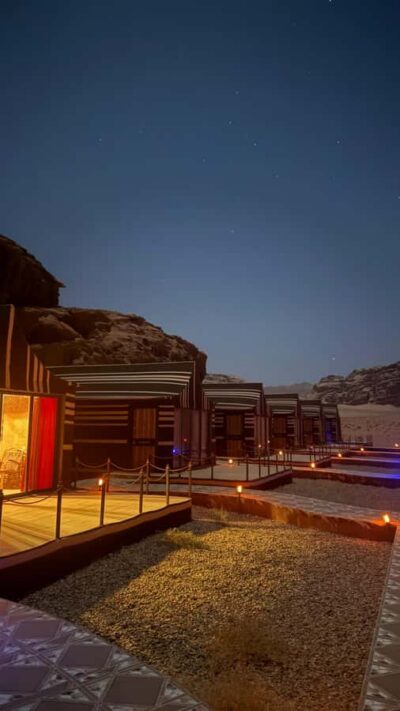
Where else you can sleep out there
Wadi Rum, Aqaba start line to desert red-sand reality
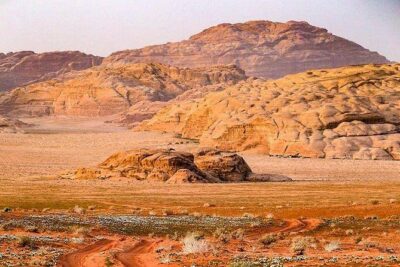
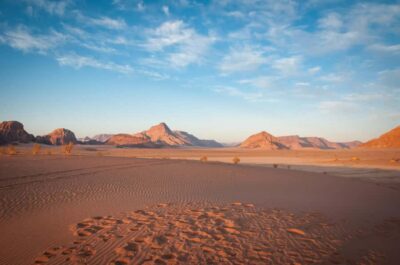
Your day starts at King Hussein International Airport in Aqaba. You get picked up and moved by private transfer, then you meet your English-speaking Bedouin guide in Wadi Rum. After that, the first big taste of the desert comes fast: a 4×4 Jeep tour through Wadi Rum’s dramatic desert scenery, the area often nicknamed the Moon Valley.
There’s a reason the first drive feels like a reset. The towering rock forms and the color shifts across sand dunes make it hard to stay in your phone. Even the shadows look engineered for photos, but the point here is feeling the scale. You’re in a place where Lawrence of Arabia and Bedouin allies fought back against Turkish forces, and the terrain still tells that story in every direction you turn.
Practical note: day 1 is less “leg workout” and more “get oriented.” That helps because later hiking days ask more of you.
Jebel Hash summit day and Wadi Sabet dunes
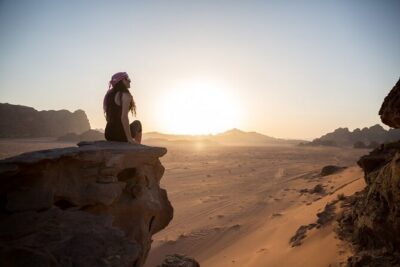
Hiking day 2 is built around altitude and views. You head to Jebel Hash, and you spend about 3 to 4 hours trekking up to the summit. From the top, you get big panoramas stretching toward both the Saudi and Jordanian deserts.
What I like about this kind of hike is that it teaches your body to work with the desert. You move when the light is right, you rest when the guide says so, and you learn where to conserve energy. After descending, there’s a lunch break in the shade, which matters more than it sounds. In Wadi Rum, shade is your best friend.
In the afternoon, the walk becomes more about sand and rhythm. You travel through the valley of Halg Umm Nughra, and you cross the dunes of Wadi Sabet as you head back toward camp. This is the kind of day where your legs will feel it, but you also start to understand how the desert changes minute by minute.
Grey and ochre Djebels, plus a final bivouac
Day 3 keeps the desert spirit going, with hiking through the gray and ochre Djebels. You head north leaving Wadi Sabet behind, passing by major massifs including Um Muqur and Um Sabatah.
This day is a good balance if you like variety. It’s not only “up and down.” There’s movement across different tones of rock and sand, and it helps break the mental load of repeating the same terrain. At the end, you set up your final bivouac and take one last opportunity to soak in that quiet, wide-open desert feeling.
Camping in Wadi Rum has a way of making you stop thinking about schedules. The night air cools things down, and you get the sky time you came for.
Siq Albarrah canyon walk, then Burdah Arch tea break
Day 4 starts with a 3-hour guided walk through Siq Albarrah. This is a canyon route, so you’re not just trudging through sand. The canyon shape gives you something to look at besides the next step: stone walls, narrow passages, and that sense of being inside the landscape instead of only beside it.
After lunch, you shift gears with transport by 4×4 toward Jebel Burdah to explore the monumental arch. The round trip for the arch climb is about 3.5 hours, so yes, plan on a proper hike day again. Once you reach the arch, you get a classic desert reward: you come down, then you take time with tea and biscuits.
In the evening, you dinner together and sleep at a bivouac campsite. If you’re deciding whether this trip is “camping-lite” or “camping-real,” this is where it tips toward real.
Trails and canyons we have walked
- Full Day Desert Tour, Jeep & Hiking
★ 5.0 · 98 reviews - Wadi Rum: Camel Trek Adventure
★ 5.0 · 19 reviews - Camping and Hiking Adventure : Discovering the south
★ 5.0 · 17 reviews - Wadi Rum: Mountain Hike with Lunch & Scenic Valley Tour
★ 5.0 · 13 reviews - Wadi Rum Mountain Hike: Umm Ad Dami, highest point of Jordan + Jeep tour & Lunch
★ 5.0 · 11 reviews
Petra’s Rose City in a full day, guided to Qasr al-bint
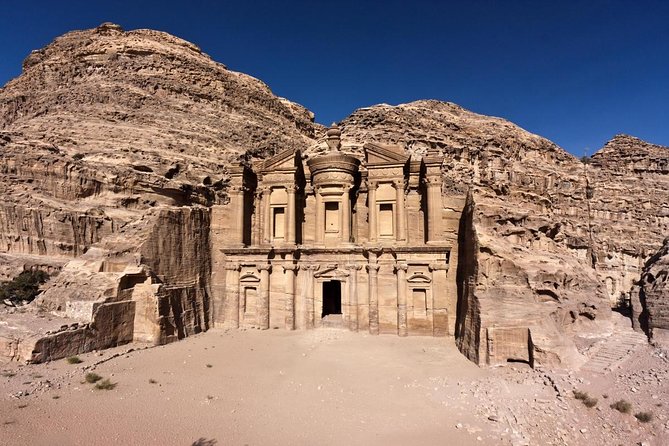
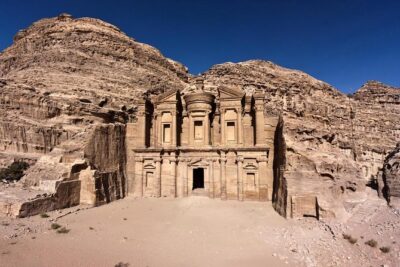
After breakfast, you transfer to Petra, the ancient Nabataean city and UNESCO World Heritage site. You get a full day in the “Rose City,” including guided time.
The Petra guidance included runs until Qasr al-bint, which is a smart choice because it covers a major sweep of the classic core without turning your day into an endless marathon. You’ll also have lunch on-site and then dinner with an overnight hotel stay.
Here’s what makes the day valuable: the guiding component helps you focus. Petra can swallow time and attention if you wander without a plan. Having someone help you move between key areas means you spend more energy looking at the carvings and less energy guessing what you’re seeing.
Also, the transition from desert bivouac to hotel feels earned. It’s not luxury for luxury’s sake, it’s practical recovery before canyon and reserve days later.
Al Ghouir Canyon and Dana Nature Reserve camping near Wadi Araba
Day 6 is a nature and hiking powerhouse. You meet your English-speaking Bedouin guide and head to Al Mansoura at 1,100 meters. Then you descend into Al Ghouir Canyon, where you’ll see gorges carved between tall pink sandstone cliffs.
This is the part of the trip where you feel the “south Jordan” idea as something physical. The terrain drops fast. You’re in tight spaces, then you come out into wider views, and the change keeps your attention sharp.
After the canyon hike, you explore Dana Nature Reserve, about 308 km². The reserve includes valleys and mountains running from the Rift Valley to Wadi Araba, with a vertical drop of more than 1,600 meters. The guide’s job here matters because Dana is diverse, with wooded highlands, rocky gravel slopes, plains, and sand dunes, plus wildlife and rare plants.
At night you camp on the heights of Wadi Araba and have a traditional Jordanian dinner. This is not just “sleep somewhere.” You’re sleeping in a setting tied to the hiking itself.
Aqaba Red Sea cooldown, coral reefs and an easy day
Day 7 goes soft by comparison. You head to Aqaba, the Red Sea port, and you get a leisure day. Aqaba is described as a charming city shaded by palm trees, with pristine sandy beaches.
There’s also the option to see coral reefs, and the information is refreshingly simple: bring a diving mask. You don’t need big planning days here, just time and comfort.
The best part about saving Aqaba for near the end is that you actually have energy to enjoy it. After desert and canyon hiking, the water feels like a reset button.
Price and logistics: does $1,771.61 feel fair?
At $1,771.61 per person for about 8 days, you’re paying for a packaged route that does not leave big gaps for you to patch yourself.
What’s included is substantial:
- Two-way airport transfers between King Hussein International Airport and Wadi Rum
- Visa entrance
- English-speaking Bedouin guides during the desert hiking days
- A private transfer pickup by air-conditioned car or van
- Wadi Rum 4×4 Jeep tour
- Entry tickets
- Cooking equipment for the camping setup
- Petra guided tour until Qasr al-bint
- 24-hour assistance
- Camping tent
- Meals: 6 breakfasts, 6 dinners, and lunch (6 lunches)
What’s not included:
- Tips for guides and drivers (optional)
- Flight tickets
- Personal expenses
So is it value? For me, it reads like you’re paying for the structure: guides, vehicles, timed transfers, entry costs, and meals. That’s the stuff that usually blows up your budget when you build this trip yourself, especially when you’re trying to connect Wadi Rum, Petra, Dana, and Aqaba without losing days to logistics.
One more reality check: the experience is non-refundable and can’t be changed. That means you should book only if your flight dates are solid.
How hard is this hike-and-camp route, really?
Based on the planned walking time, you should assume this is an active trip.
You have multiple hiking days with sessions roughly in these ranges:
- Jebel Hash summit trek of about 3 to 4 hours
- Canyon and canyon-adjacent walking including Siq Albarrah at about 3 hours
- Burdah Arch with roughly 3.5 hours round trip
- A canyon descent into Al Ghouir, plus nature reserve exploration
Then you add camping nights in Wadi Rum and again near Wadi Araba.
The good news: the trip states that most travelers can participate, and the presence of guides and organized meals means you’re not doing this unsupported. But “can participate” and “comfortable” are not the same thing. If you hate rough footing, long sitting transfers, or sleeping outdoors, you’ll feel it.
Gear you’ll want is not listed, so I’ll stick to safe advice: pack for sun, bring water strategy you’re comfortable with, and be ready for nights that feel cool compared to daytime.
Who should book this, and who should not
This route makes the most sense if you want:
- Desert hiking with Bedouin guiding
- Petra with help navigating rather than wandering in exhaustion
- A nature day in Dana Nature Reserve
- A final Aqaba Red Sea reward day that doesn’t feel rushed
It’s also a good match if you appreciate smooth organization. The service side here matters, with 24-hour assistance and coordination that includes airport-to-desert transfers and guided Petra time. If you prefer a plan that is adjusted by reality, you’ll like that this type of operator is used to coordinating around changing conditions.
I’d be cautious if you want a mostly “comfortable hotels only” itinerary, or if you want fewer hikes and more long beach time.
Should you book this Wadi Rum plus Petra plus Aqaba adventure?
If your dream Jordan trip includes Wadi Rum on foot, Petra with guiding, and then a Red Sea break, this package is one of the more efficient ways to connect all the pieces.
Book it if:
- You’re okay with camping and bivouacs
- You don’t mind hiking days that are several hours long
- You value included guides, meals, entry tickets, and transfers enough that you do not want to DIY the logistics
Skip it if:
- Your flights are shaky, because the experience is non-refundable
- You want mostly low-effort touring
- You’re sensitive to heat, long sun exposure, or sleeping outdoors
If you’re on the fence, consider what you’ll remember most. The desert nights and canyon walking tend to stay with you far longer than another bus stop.
FAQ
What airport do I use for this trip?
You start and end at King Hussein International Airport in Aqaba (AQJ).
Are airport transfers included?
Yes. The trip includes two-way transfers between the airport and Wadi Rum.
Do I get an English-speaking guide in the desert?
Yes. There is an English-speaking Bedouin guide during the hiking days in the desert.
Is transportation in Wadi Rum included?
Yes. You get a 4×4 Jeep tour in Wadi Rum, plus other 4×4 transport during the desert days where needed.
What meals and tickets are included?
Meals are included with 6 breakfasts, 6 dinners, and lunch (6), plus entry tickets. Cooking equipment, a camping tent, and Petra guided tour until Qasr al-bint are also included.
Is there free time for swimming in Aqaba?
Yes. On the Aqaba day, you have leisure time, and the plan includes the chance to swim in the Red Sea. A diving mask is mentioned as all you need.
Elsewhere on Jordan Insider
More Trails and Canyons
Nights Under Canvas
Fresh off the review desk
- Wadi Rum Classic 4-Hour Jeep Safari★ 5.0 · 3 reviews
- WADI RUM: ALL DAY JEEP TOUR with overnight and full meals★ 5.0 · 3 reviews
- Wadi Rum 4-Hour Sunset Tour – Wadi Rum Desert Highlights★ 5.0 · 3 reviews
- 1 Day & 1 Night | Stay & Jeep + Camel Tour in Wadi Rum | Magic Bedouin Star★ 4.5 · 3 reviews
- Transfer from Aqaba Airport to Petra★ 5.0 · 3 reviews
- Petra Day Tour from Aqaba Port (Shore Excursion Petra) – JHT★ 5.0 · 3 reviews
Bedouin Camps and Desert Overnights, compared.
 ★ 5.0Wadi Rum Full Day Jeep Tour + Overnight & Dinner in Bedouin CampFrom $107368 reviews
 ★ 5.0Wadi Rum Cave Camping with Jeep TourFrom $126200 reviews
 ★ 4.9Wadi Rum: Bedouin Camp Stay,Full-Day Desert Tour with 3MealsFrom $39198 reviews
 ★ 5.0Full Day Jeep Tour with Overnight in beduin Camp Stay! (All Meals Included)From $95136 reviews
 ★ 4.9Wadi Rum: Guided Jeep Tour With Overnight Stay and MealsFrom $87101 reviews
 ★ 5.02-Day Private Tour from Amman: Petra, Wadi Rum Camp & Dead Sea.From $22047 reviews
 ★ 5.0Wadi Rum Jeep Tour & Camp; OvernightFrom $11841 reviews
 ★ 5.0Petra Wadi Rum overnight visiting Dead Sea for 3hoursFrom $26041 reviews
Browse the lists this tour appears in