
REVIEW · WADI RUM DESERT TOURS
Wadi Rum Half-Day Desert Tour | Wadi Rum Desert
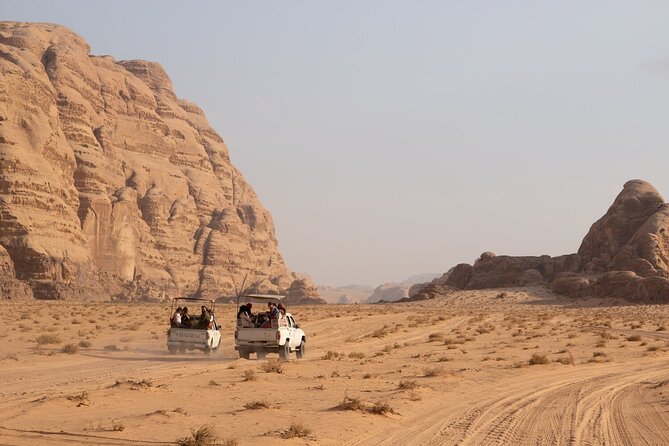
Wadi Rum feels like another planet. In just 4 hours and change, you bounce through UNESCO-protected desert scenery, stopping for named rock formations, ancient inscriptions, and photo climbs.
What I like most is how the day is paced, you get enough drive time to see multiple icons, and then you get short, doable walks at the best spots. You’ll also appreciate a good guide, with real names like Attalah or Ayad showing up in people’s accounts, and focusing on the exact places you came for, plus a friendly tea moment along the way.
Here’s the main tradeoff, you’re riding in a 4WD over uneven desert tracks, and getting in and out can be awkward. Also, the base price does not include the Wadi Rum entrance fee, so you’ll want to budget 7 JD per adult (or confirm it’s covered if you have the Jordan Pass).
In This Review
- Key highlights to look for
- From Wadi Rum Rest House to 4WD mode
- The entrance fee detail that affects your real cost
- Lawrence’s Spring at Ain Abu Aineh
- Petroglyphs and narrow walls in Khazali Canyon
- Climbing the red sand dune for views
- Little Rock Bridge and the thrill of rock formations
- Um Fruth Rock Bridge and Abu Khashaba Canyon time
- Tea breaks, coats, and the human side of the desert
- Optional camel ride, and what it changes about your day
- Sunset upgrade from a remote viewpoint
- Who this tour is for, and who should skip it
- Photo and comfort checklist that actually helps
- Should you book this Wadi Rum half-day 4WD tour?
Key highlights to look for
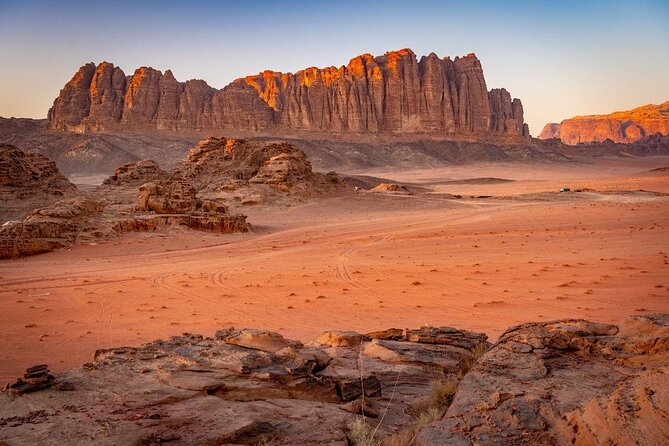
- UNESCO-protected Wadi Rum Protected Area stops, not just generic driving
- Lawrence’s Spring (Ain Abu Aineh) with an optional short walk
- Khazali Canyon (Jebel Khazali) petroglyphs, where the marks on the rock matter
- Rock bridges and arches, including the Um Fruth and Little Rock Bridge area
- Optional camel ride to shift from 4WD speed to Bedouin pace
- Optional sunset tour with a remote viewpoint finish
More of Wadi Rum, from two hours to two nights
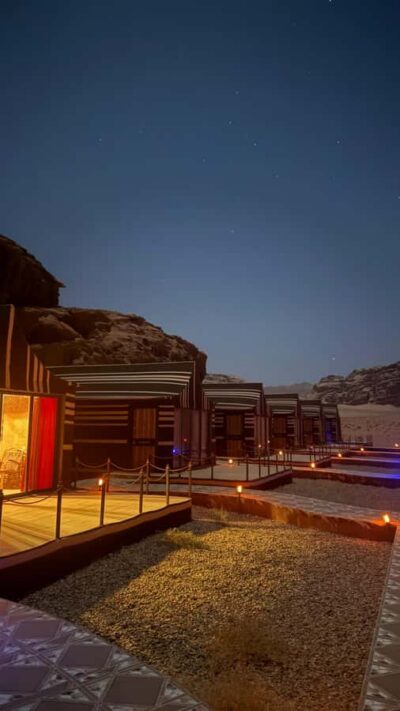
From Wadi Rum Rest House to 4WD mode
Most half-day Wadi Rum experiences start the same way, you meet at Wadi Rum Rest House and then your group changes over to a private 4WD for the run through the protected area. The tour is private in the sense that only your group participates, which usually means less waiting around and more time on the ground when you reach the stops.
The timing is tight in a good way. At about 4 hours 15 minutes, you get a “greatest hits” route without spending your whole day in transit. Your guide/driver keeps it moving from canyon to canyon, while still giving you chances for quick climbs and photos.
One practical note, the vehicle rides over bumpy desert tracks. If you’re worried about comfort, ask where you can sit, because some seats bounce less than others, and you can often choose the passenger position.
The entrance fee detail that affects your real cost
The advertised package includes a local guide/driver and bottled water, but it does not include the Wadi Rum entrance fee. You pay that separately at the Visitor Centre, and it’s listed as 7 JD per adult, with the note that it can be free if your Jordan Pass covers it.
This matters because half-day tours can look like a bargain until you add the entrance line item. If you have the Jordan Pass, double-check it covers Wadi Rum entry so you don’t pay twice. If you do not, just plan for the fee upfront and the base tour price becomes easier to judge.
Also, the tour offers mobile ticket and group discounts, so it’s worth seeing if your exact departure is more cost-effective when booked with friends.
Lawrence’s Spring at Ain Abu Aineh
Your first real stop is Ain Abu Aineh, commonly called Lawrence’s Spring. Even if you skip the short walk, you’ll see why this point is famous. It’s a moment where the desert feels less empty, because water and carvings make the area feel alive.
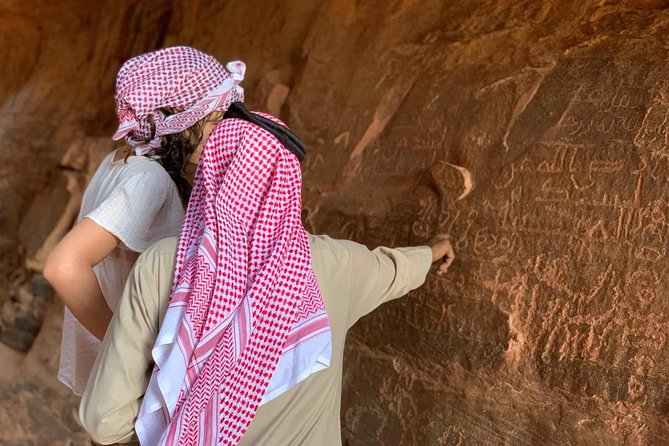
When you do take the optional walk, expect a bit of scrambling and a few photo opportunities. The big payoff is twofold: you get the natural spring setting, and you can also spot nearby ancient petroglyphs and inscriptions on rock.
If you care about meaning, slow down here for a minute. These marks are part of why Wadi Rum feels like more than a backdrop. They connect the scenery to human presence, not just rocks and sand.
A small tip: wear shoes with grip. Even short walks in red sand can be slippery, and you’ll likely be stepping on uneven ground in a few spots throughout the half-day.
Petroglyphs and narrow walls in Khazali Canyon
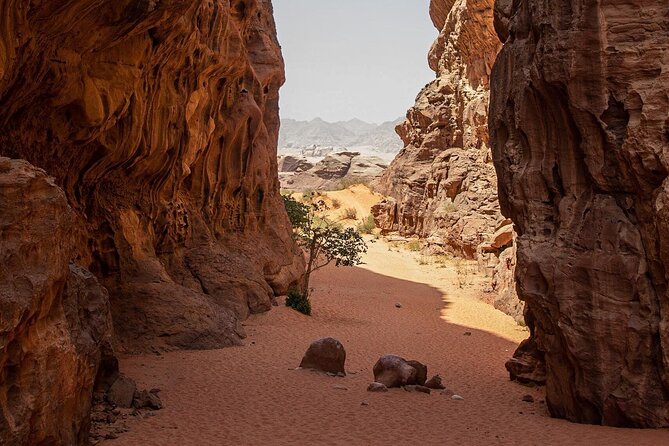
Next comes Khazali Canyon (Jebel Khazali), a narrow canyon area known for its ancient petroglyphs and inscriptions. This is the stop that gives you the most “wow, people really lived and marked this place” feeling.
In practice, it’s not a long hike. Your guide brings you in, then you spend enough time to look carefully at rock surfaces and understand what you’re seeing. You’re not just getting dragged to a viewpoint, you’re getting oriented to a specific type of heritage, the kind you can’t replicate from a distance.
There is also a photos advantage. Canyon walls make the lines and textures pop, and the inscriptions give you a story in the frame, not just a red desert background.
Shorter outings, if the day is tight
- Take advantage of a half-day boat dive experience in Red sea of Aqaba.
★ 5.0 · 71 reviews - Half-Day Jeep Tour: “Wadi Rum Images”
★ 5.0 · 43 reviews - Half-Day Jeep Safari “Wadi Rum Highlights!” w/ Professional Bedouin Guide
★ 5.0 · 29 reviews - Half-Day 4×4 Wadi Rum Tour
★ 5.0 · 25 reviews - Wadi Rum Half-Day 4×4 and Camel Tour
★ 5.0 · 8 reviews
Climbing the red sand dune for views
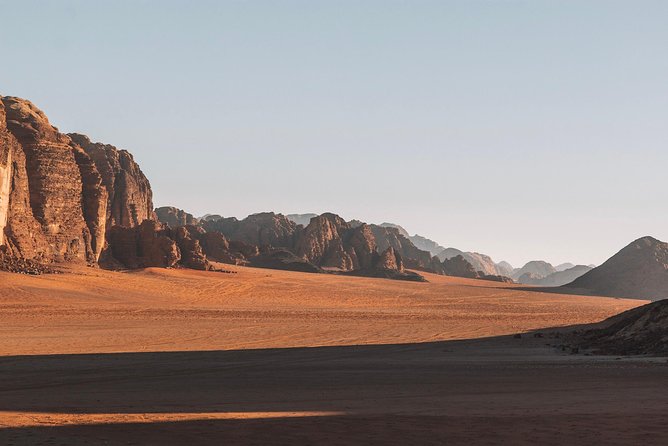
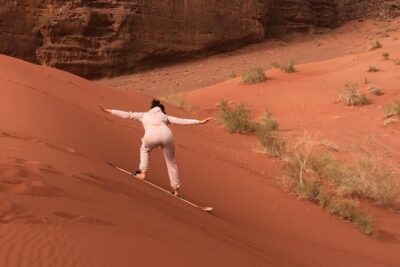
After the spring and canyon, you’ll hit a Red Sand Dune stop where you have the optional chance to climb to the top. This is the “work for the view” segment.
If you’re in decent shape, the climb is usually the fun part. The air changes as you go higher, and the horizon opens up, which makes everything you’ve seen so far feel connected. If you’re not up for the climb, you can often stay back and still get impressive views.
A practical consideration, if it’s a hot day, take your time. Half-day tours move quickly, and you still want to save energy for the rest of the route and any sunset upgrade you might choose later.
Little Rock Bridge and the thrill of rock formations
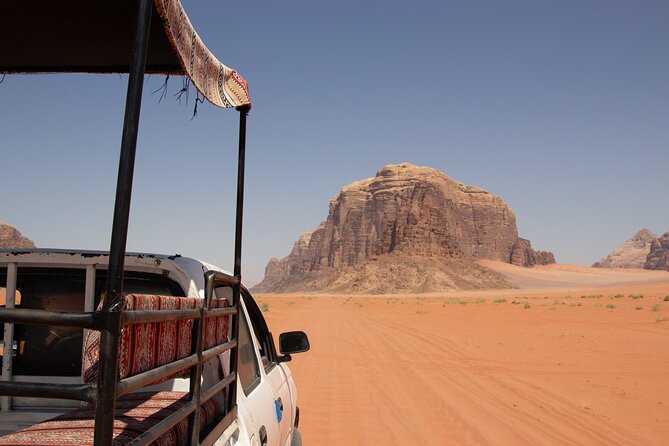
Then you get one of those Wadi Rum moments that feels like set design, the Little Rock Bridge, plus the wider stop area around it. These natural bridges and arches look dramatic from a distance, but they get even better when you stand close enough to see how the rock has shaped itself over time.
Expect valley views from your stops here, and expect the guide to point out what to look for. Some formations create a natural “window” feeling, and once you know where to stand, your photos improve fast.
One more point about comfort, the route between formations can be bumpy. If you’re prone to motion discomfort, consider sitting in the seat that feels most stable, and drink the included water at breaks.
Um Fruth Rock Bridge and Abu Khashaba Canyon time
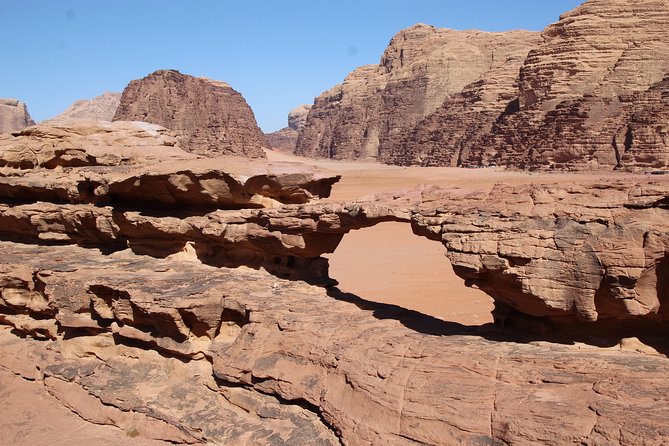
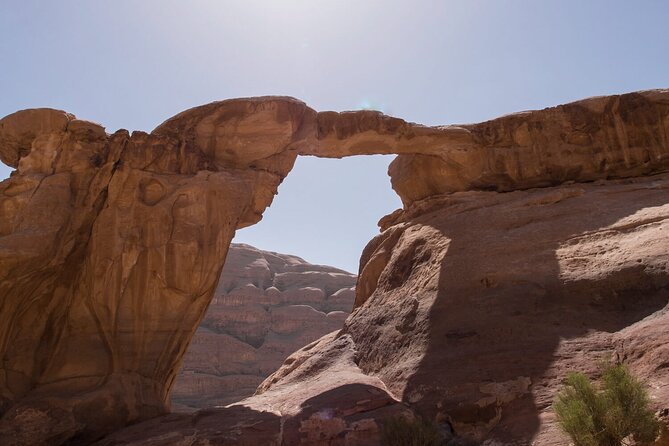
Your route also includes the Um Fruth Rock Bridge area, another iconic bridge formation that people often remember longer than they expect. Wadi Rum’s rock features can look similar from afar until you see them up close, and this stop usually clicks the visual puzzle into place.
The day can also include Abu Khashaba Canyon on the schedule. Even though details vary by route conditions, it’s commonly part of the middle stretch where the guide uses the terrain to move you efficiently while keeping scenery options plentiful.
If you’re the type who likes “name locations, not vague directions,” you’ll probably enjoy how the route gives you specific stops, not just general desert driving.
Tea breaks, coats, and the human side of the desert
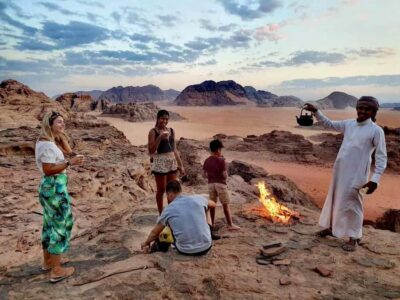
Many people remember Wadi Rum for the big sights, but the human touch can be the difference between a good outing and a memorable one. In accounts tied to guides on this route, the tea experience shows up often, sometimes with a small fire and a relaxed conversation.
You might also run into the kind of helpful gestures that make you feel taken care of on a windy desert afternoon. For example, one person notes their guide lent a coat on the way home to help with warmth. Another mentions photo help and even support with shopping stops.
Those details are hard to quantify until you’re there, but they matter. When the desert gets cooler or breezier, a small bit of guidance, warmth, and patience goes a long way.
Optional camel ride, and what it changes about your day
You can upgrade to add a camel ride, and that shifts the whole feel of the outing. Instead of only 4WD speed and quick photo stops, you get a slower, more Bedouin-like rhythm for part of the experience.
In one described day, the camel ride was paired with exploring caves, which is a good reminder that the camel portion can add more than just a photo moment. It tends to create time to look around, not just move through the scenery.
Physically, expect to spend time sitting and balancing. If you have mobility concerns, make sure the camel portion is manageable for you. Also, wear shoes you can keep on securely, since you’ll want traction on any rocky or sandy surfaces.
Sunset upgrade from a remote viewpoint
If you want the sky show, you can upgrade to a sunset tour. The finish is described as watching sunset from a remote viewpoint, which matters because you’re not just watching color changes from the road.
Sunset also changes how the rock bridges and canyon walls look. Shadows sharpen the forms, and the red sand tones shift in a way that makes earlier viewpoints feel brand new.
Be realistic, though, about what sunset does to timing. A sunset add-on can mean you’ll be out longer in the day’s cooler hours, and you’ll want warmer layers than you think. Desert air can change fast once the sun starts dropping.
Who this tour is for, and who should skip it
This is a strong choice for you if you want a high-impact half-day with named stops like Lawrence’s Spring, Khazali Canyon, and the rock bridge areas. It’s also a good fit if you already have a driver or plan your own transportation around Aqaba and Wadi Rum, because this tour is designed as an efficient local adventure rather than a long, all-day bus route.
It’s less ideal if you have trouble with getting into and down from a 4WD vehicle. The notes are clear that the terrain and vehicle steps can be challenging. If mobility is a concern, consider a more accessible option or plan on minimizing climbing segments like dune climbs.
For fitness, the tour expects at least moderate physical fitness, mainly due to short hikes and climbing for views. You do not need to be a mountaineer, but you should be ready for uneven ground.
Finally, families can do well, as long as the kids can handle the vehicle ride and short walks. One account highlights a guide being especially attentive to a child, and that kind of focus can make the desert feel less intimidating.
Photo and comfort checklist that actually helps
Half-day tours are short, and your photos rely on moments when you’re not rushed. Here’s what I’d bring based on what people found useful on this style of route:
- Good grip shoes for the optional dune climb and short canyon walks
- A light layer for breezy moments, especially if you choose sunset
- Sun protection for the red sand climbs and exposed viewpoints
- A small patience buffer for bumpy driving, because it’s part of the adventure
If your main goal is photos, also keep a simple plan, climb when conditions feel safe, and don’t try to sprint to every angle. The best shots usually come from taking one or two minutes to reposition.
Should you book this Wadi Rum half-day 4WD tour?
Book it if you want a straightforward way to see the signature parts of Wadi Rum Protected Area in one go, without wasting half your day on logistics. The price can feel fair once you remember what’s included (guide/driver plus water) and you correctly factor in the entrance fee you’ll pay at the Visitor Centre, or confirm Jordan Pass coverage.
Skip or rethink it if:
- you dislike vehicle rides over rough tracks,
- you have difficulty with getting in and out of the 4WD,
- or you want a long, slow day with minimal walking.
My call: if you’re visiting Wadi Rum for the first time and you want the landmarks you hear about, this half-day route is a solid way to do it. The option to add a camel ride or sunset is also the kind of flexibility that lets you tailor the desert feel, faster and modern with 4WD only, or slower and more traditional with camel and evening light.
If your schedule allows it, I’d also aim for a day when weather looks cooperative, because visibility and light are everything when you’re chasing rock bridges and canyon inscriptions.
The Wider Jordan Pile
Elsewhere on Jordan Insider
Still in Wadi Rum
Fresh off the review desk
- Wadi Rum Classic 4-Hour Jeep Safari★ 5.0 · 3 reviews
- WADI RUM: ALL DAY JEEP TOUR with overnight and full meals★ 5.0 · 3 reviews
- Wadi Rum 4-Hour Sunset Tour – Wadi Rum Desert Highlights★ 5.0 · 3 reviews
- 1 Day & 1 Night | Stay & Jeep + Camel Tour in Wadi Rum | Magic Bedouin Star★ 4.5 · 3 reviews
- Transfer from Aqaba Airport to Petra★ 5.0 · 3 reviews
- Petra Day Tour from Aqaba Port (Shore Excursion Petra) – JHT★ 5.0 · 3 reviews
Wadi Rum Desert Tours, compared.
 ★ 4.9Petra, Wadi Rum, and Dead Sea 2-Day Tour1,173 reviews
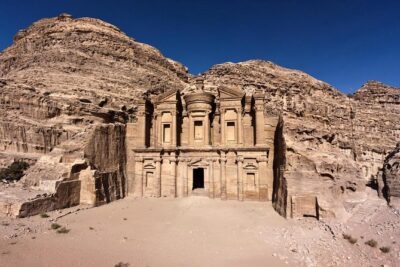 ★ 5.02-Day Tour: Petra, Wadi Rum, and Dead Sea from AmmanFrom $2491,141 reviews
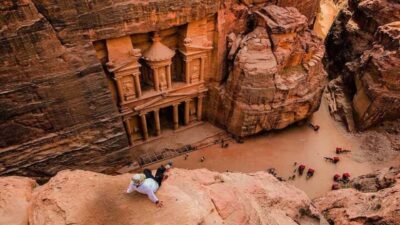 ★ 4.9Petra & Wadi Rum Private or group Day TourFrom $126750 reviews
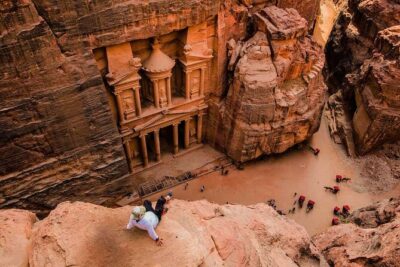 ★ 5.0Petra and Wadi rum Full day TourFrom $99538 reviews
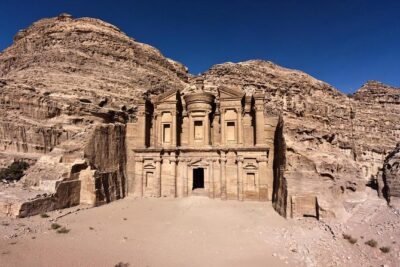 ★ 5.02-Day Petra, Wadi Rum and Dead Sea Tour from AmmanFrom $275467 reviews
 ★ 5.03-Day Private Tour from Amman: Petra, Wadi Rum, Dana, Aqaba, and Dead SeaFrom $349425 reviews
 ★ 5.0Wadi Rum Full Day Jeep Tour + Overnight & Dinner in Bedouin CampFrom $107368 reviews
 ★ 4.9Petra & Wadi Rum: Full Day Private Tour with Hotel PickupFrom $133310 reviews
Browse the lists this tour appears in