
REVIEW · JORDAN HIGHLIGHTS MULTI-DAY TOURS
Explore Jordan In 7 Days only transportation
Jordan feels less stressful with a chauffeur. This private, air-conditioned transport-only plan strings together the big Jordan highlights with an English-speaking driver and the kind of small comforts that keep you moving, like free Wi-Fi and bottled water. I really like the English-speaking drivers (you get clear explanations and confident driving), and I also appreciate the on-board perks that make long rides feel civilized, not exhausting.
The main thing to watch is cost add-ons. Entrance fees and local guides at sites are not included, and you will do quite a lot of walking on uneven ground, especially around Petra and in the desert.
In This Review
- Key highlights
- Why transport-only works so well in Jordan
- Price and value, especially for a group of 3
- Day 1 in Amman: airport meet, then straight to sleep
- Day 2 north Jordan: Umm Qais, Ajlun Castle, and Jerash’s big-stage ruins
- Umm Qais (Archaeological Museum of Umm Qais)
- Ajlun Castle (Qala’at ar-Rabad)
- Jerash Ruins
- Day 3 mosaics, Mount Nebo, and Al-Maghtas, then pivot toward the Dead Sea
- Madaba Mosaic Map
- Mount Nebo
- The Baptism Site of Jesus Christ (Al-Maghtas)
- Day 4 Dead Sea time: a full day to slow down
- Day 5 Petra: your big-ticket day, scheduled for a full workday
- Day 6 Wadi Rum: Moon Valley sunset plus desert night reality
- Wadi Rum lodging: basic vs upgraded camp comfort
- What to pack for desert cold
- Day 7 Aqaba marine life, Karak Castle, then back to the airport by midnight
- Aqaba Marine Park
- Karak Castle
- Airport by midnight
- Vehicles, drivers, and onboard comfort that actually helps
- Group size and seating reality
- Driver quality, in real-world terms
- Entrance fees, guides, and when the Jordan Pass matters
- What to pack for uneven ground, desert nights, and long ride days
- Should you book this 7-day transport-only Jordan route?
- FAQ
- Is this a private tour or do I share transportation with other people?
- What is included in the price?
- Are entrance fees and site guides included?
- Do I need to purchase the Jordan Pass?
- Does the tour include airport transfers?
- Is there a mobile ticket?
- What kind of vehicles are used?
- How does group size affect comfort?
- What is Wadi Rum accommodation like?
- What should I pack for the desert part of the trip?
- Can I cancel and get a full refund?
Key highlights
- Private door-to-door transportation with no shared group and a dedicated English-speaking driver
- New, air-conditioned vehicles plus free Wi-Fi, bottled water, and wet wipes
- A route that covers north to south without the hassle of self-driving
- Sunset-first Wadi Rum timing in the Moon Valley area, plus a full day pace
- Flexible group sizing (ideal up to 3, mini-van/mini-jeep options for larger groups)
- Desert stay options in Wadi Rum (basic tents with shared toilets, or upgraded tents with en-suite toilets and air-conditioning)
Moving between cities without the hassle


Why transport-only works so well in Jordan
Jordan is one of those countries where distances add up fast. Even if you love planning, routing yourself from Amman to Umm Qais, then down through Madaba and Mount Nebo, on to Petra, and finally to Wadi Rum and Aqaba can turn into a lot of logistics juggling.
This experience keeps it simple. You get private transportation, a driver who speaks English, and a reliable way to get from one stop to the next without renting a car or figuring out the timing yourself. That matters because your days are packed. The itinerary hops between very different landscapes, from rolling green hills in Jerash and Ajlun to the stark rock shapes of Petra and the desert calm of Wadi Rum.
You are not buying a guided lecture for every stop. You are buying movement, comfort, and safety. For many travelers, that is the smartest way to spend time: let the driving be handled, and then you can decide how much time you want for sites and viewpoint breaks.
Price and value, especially for a group of 3
The price is $1,450 per group for up to 3 people, for about 7 days. That means the per-person cost changes a lot depending on your group size.
If you book as 3, the value is straightforward: you split the group price across the trip. If you are 2, you will feel the cost more, because it is still priced per group, not per person. If you are booking as a family or friends and you expect 4 people, the company notes that sitting comfort can be reduced in medium and large vehicles. They can secure a mini-jeep when needed, sometimes for an extra cost, so you can plan for that if you care about space and legroom.
What you get for the money is not just a car. It is private service, English-speaking drivers, and real ride comfort, including air-conditioning. Add the included extras (free Wi-Fi, bottled water, wet wipes) and the trip starts to feel less like transportation and more like a moving base.
Day 1 in Amman: airport meet, then straight to sleep
The trip starts at Queen Alia International Airport. A representative meets you after arrival, and then you transfer to your hotel in Amman. If your flight lands early, you can ask about adding activities for a supplement.
This is a good first day approach because Jordan days can be long. After a flight, the best plan is to get settled and avoid wasting your energy hunting for directions. You also get a clean reset for jet lag, because the day ends with an overnight in Amman rather than immediately rushing into multi-hour sightseeing.
You will also want to note the small but practical idea behind this: they plan the route around how people actually travel. Less stress on day 1 means you start day 2 ready to explore the north.
Day 2 north Jordan: Umm Qais, Ajlun Castle, and Jerash’s big-stage ruins
Day 2 covers three stops that work well together because they give you different flavors of northern Jordan.
Whole-country runs, other lengths and operators
- Multi day tour in Jordan – 08 Days
★ 5.0 · 137 reviews - 6-Night Best of Jordan Tour from Amman: Jerash, Dead Sea, Petra, and Wadi Rum
★ 5.0 · 54 reviews - Best of Jordan in 7 Days (customizable)
★ 5.0 · 35 reviews - Explore Jordan Tour 6 day tour 5 nights
★ 5.0 · 34 reviews - 4 Days Best of Jordan (Customizable)
★ 5.0 · 22 reviews
Umm Qais (Archaeological Museum of Umm Qais)
Umm Qais, linked to ancient Gadara, sits on a hilltop with sweeping views over the Jordan Valley and toward the Sea of Galilee. The ruins include features like a colonnaded street, a vaulted terrace, and the remains of two theatres.
This stop is one of the best places on the route for a slow look. You get scenery first, then history second. If you like photographing landscapes with ruins in the frame, this is a strong start.
A useful practical tip they offer: many visitors combine the drive from Amman to Umm Qais with Jerash or Ajloun along the way. You get that exact momentum here, so you are not wasting daylight doing separate trips.
Ajlun Castle (Qala’at ar-Rabad)
Ajlun is for medieval fort vibes plus nature breaks. The castle is tied to Ayyubid military architecture, and it helped defeat the Crusaders centuries ago. The setting matters too, because the Ajlun-Dibbin area is known for pine forests, so the drive and breaks can feel like breathing room after the long-distance travel.
If you like military architecture but also enjoy a green landscape, Ajlun is a nice balance day 2 gives you.
Jerash Ruins
Then you hit Jerash, one of Jordan’s most impressive Greco-Roman sites. The mix here is fascinating: Greco-Roman elements on top of Oriental influences. The ruins feel like a whole city rather than a single monument.
Jerash is also tied to seasonal programming, with the Jerash Festival of Culture and Arts running for about three weeks in summer. Even if you are not there during a festival, it helps you understand why Jerash feels lively for visitors.
A realistic consideration: Jerash and the surrounding areas require walking on uneven ground. Wear shoes that can handle stone and keep your ankles happy.
Day 3 mosaics, Mount Nebo, and Al-Maghtas, then pivot toward the Dead Sea
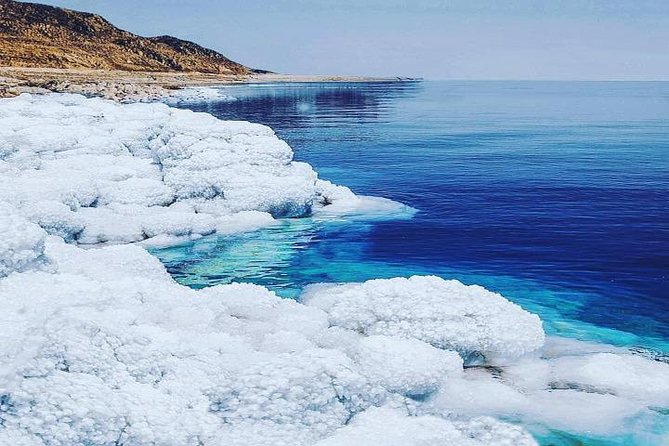
Day 3 centers on religious and scenic viewpoints, with a strong “see it, then move on” rhythm.
Madaba Mosaic Map
Madaba is known as the City of Mosaics, and the Madaba Mosaic Map is the quick, high-impact start. Expect mosaics tied to Byzantine and Umayyad traditions.
This is a stop that works even if you are short on time. In a day full of bigger viewpoints, it gives you a close-up cultural detail.
Mount Nebo
Mount Nebo is where the views do the talking. It stands almost 1,000 meters high, and from the top you can see the Dead Sea, Bethlehem, and even Jerusalem on a clear day.
This is the kind of stop where you should slow down. Take a moment to look across the horizon before rushing into photos. The landscape gives context to why this area has always mattered.
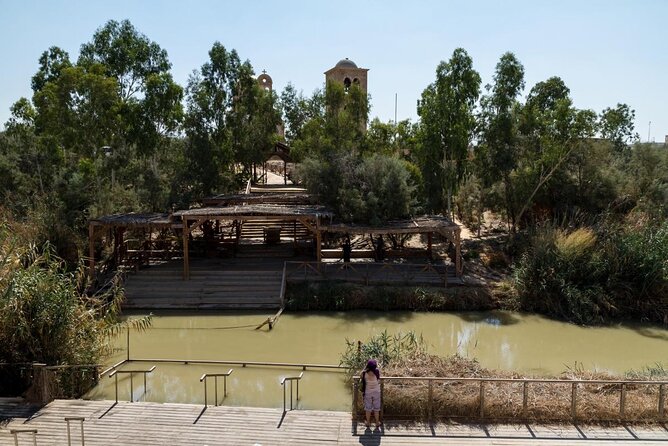
The Baptism Site of Jesus Christ (Al-Maghtas)
Then you head to Al-Maghtas, the baptism site of Jesus Christ. The schedule pairs this with a night heading toward the Dead Sea.
That pairing makes sense because it helps you keep momentum. You go from sacred site viewing into a slower, restorative day at the lowest point on Earth.
Day 4 Dead Sea time: a full day to slow down
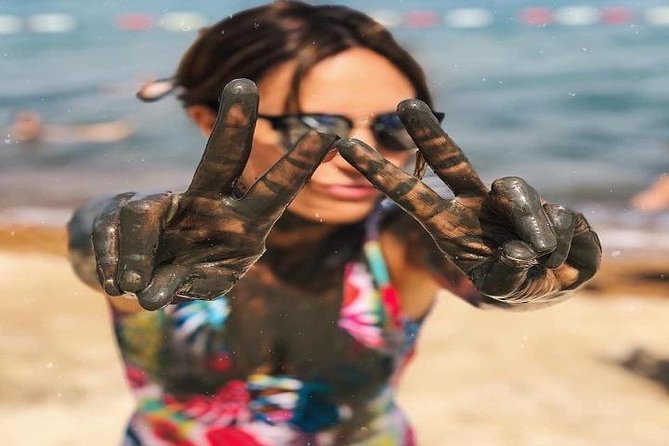
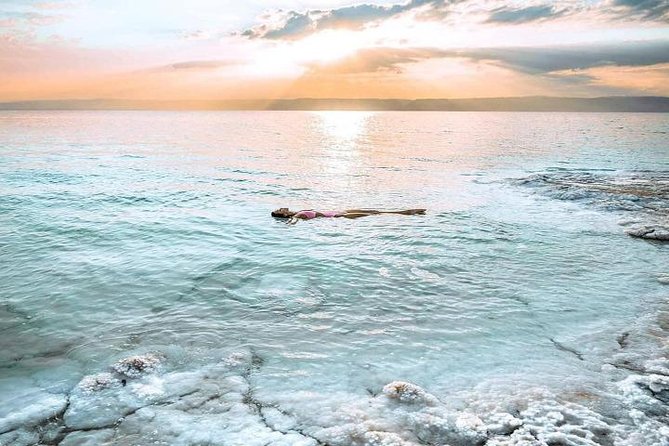
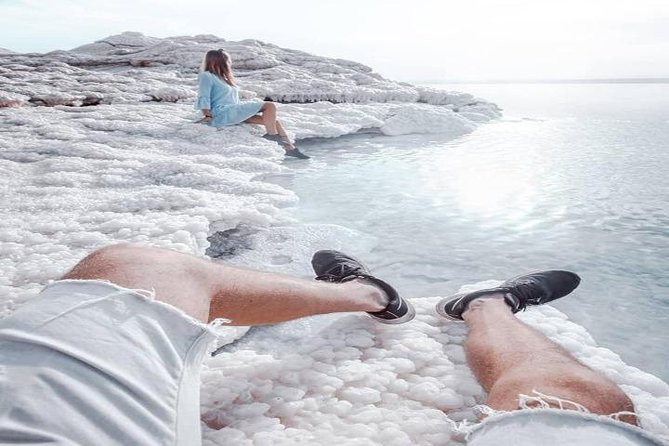
Day 4 is built around one idea: relax in the Dead Sea region, the lowest point in the world, then head south the next day.
Since the plan does not add a long list of separate attractions here, treat this as a reset day. You are switching gears from sightseeing to recovery. The best way to make this day worth your time is to give yourself room to breathe, and to manage your body after lots of walking.
This is also a day where small practical habits matter. Expect different surfaces and very different conditions from Petra and Wadi Rum. Keep your routine simple: rest, take your time, and let the day do its job.
Day 5 Petra: your big-ticket day, scheduled for a full workday
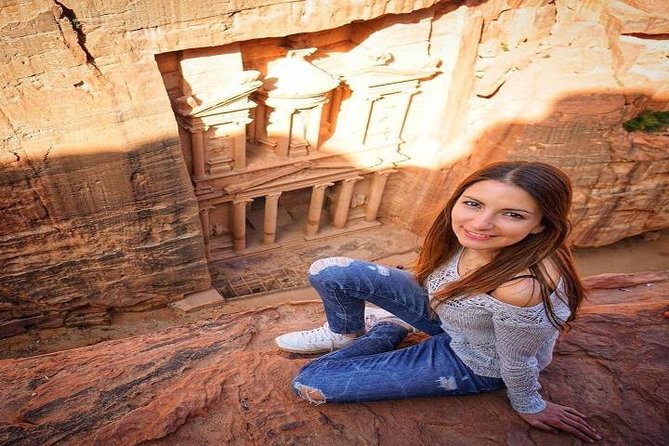
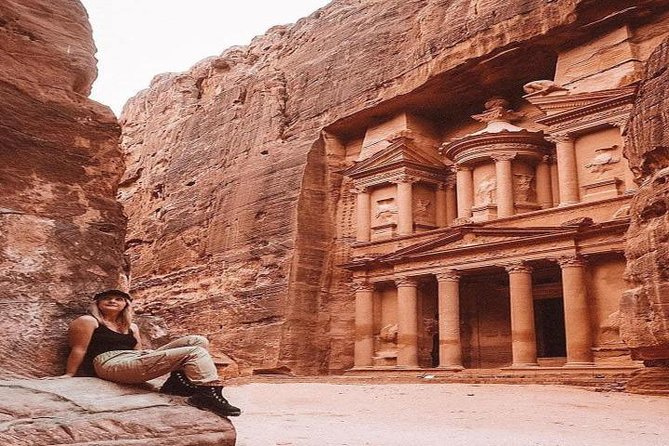
On day 5, you arrive at Petra and spend about 8 hours exploring. Petra is the headline attraction, and having a full stretch of time is a smart way to avoid the feeling of racing through stone at the end of a tiring trip.
The itinerary frames Petra as a desert-and-rock kind of adventure. That is exactly the vibe you should plan for. Petra does not feel like a museum you walk once. It is a route through changing views, with terrain that can make you rethink your shoes and your pace.
A key practical point from the tour info: the trip involves quite a lot of walking on uneven ground. Petra is one of the places where that becomes real. I recommend planning for breaks, not just photos.
If you want to understand Petra without a guide, you can still enjoy it. But remember entrance fees and local guides at sites are not included, so if you want a deeper narrative for the carvings and architecture, you might want to arrange that locally.
Day 6 Wadi Rum: Moon Valley sunset plus desert night reality
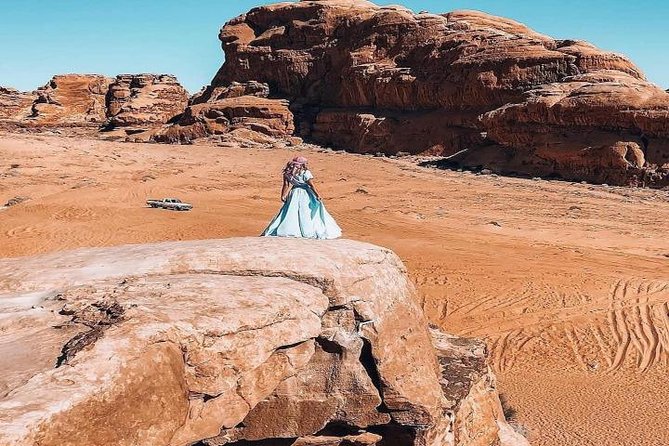
Day 6 is Wadi Rum Protected Area, about 17 hours in total. You are heading to the Moon Valley area for what they describe as the most incredible sunset.
Wadi Rum is where the trip shifts from ancient cities and viewpoints to pure landscape theatre. In a place like this, your schedule matters. Sunset timing is everything, because the rock and sand change color quickly. This itinerary gives you that focus.
Wadi Rum lodging: basic vs upgraded camp comfort
You will also spend the night in Wadi Rum. The tour notes two camp styles:
- Upgraded camp with tents that have en-suite toilets and air-conditioning
- Basic camp with private tents and shared toilets
This difference can be huge if you are traveling with kids, have mobility concerns, or just hate dealing with basic restroom logistics after sunset.
What to pack for desert cold
One more important detail: bring warm clothes. They specifically warn that it can become chilly after sundown and at night. That means even if your day feels hot, your evening might surprise you. A hat and sunscreen help for daytime too, but the real win is packing layers for after dark.
If you think you will only wear your daytime outfit until you return, Wadi Rum will correct that quickly.
Day 7 Aqaba marine life, Karak Castle, then back to the airport by midnight
Day 7 keeps the schedule moving and closes the loop.
Aqaba Marine Park
First, you visit Aqaba Marine Park. The description calls it the only sea spot in Jordan to see marine life, so it is a nice change of pace after days of stone and desert.
Aqaba is also an antidote to the inland feeling of the rest of the route. If you have been craving water views, this is where you get them.
Karak Castle
Next is Karak Castle, with about 2 hours for the visit. This adds another medieval stop to the route after Ajlun, so you get repeating themes: castles as defense, and castles as viewpoints over routes and valleys.
If you like comparing how different regions built fortifications, Karak is a satisfying follow-up.
Airport by midnight
Finally, you head back to Queen Alia International Airport by midnight. That timing is practical for a last-day finish, but it also means you should avoid treating day 7 like a casual shopping morning. It is your travel wrap-up day.
Vehicles, drivers, and onboard comfort that actually helps
A lot of tours claim comfort. This one lists concrete items, and that matters.
You ride in new, air-conditioned vehicles. Drivers speak English and have long experience. On board, you get free Wi-Fi, wet wipes, and bottled mineral water, and sometimes juices.
Those details might sound minor until you sit in traffic or do long transfers. Wi-Fi helps with messaging and planning. Wet wipes help when you are sweaty and dusty after Petra or Wadi Rum. Bottled water keeps you from rationing your hydration.
Group size and seating reality
The tour also gives a helpful warning about group size:
- They recommend booking a maximum of three people for comfort
- With four people, freedom in seating can be reduced, especially if a flight segment is about 3 to 4 hours
- They can sometimes secure a mini-jeep when needed for groups where comfort matters more
- For 4 to 7 people, they provide a mini-van, and for larger groups they use medium and large buses
This is one of those times where the tour is honest. Seating comfort is not a small thing. It affects how tired you feel for sightseeing.
Driver quality, in real-world terms
The reviews attached to this service highlight several drivers by name, including Abdullah, Moutassem (sometimes spelled Motassem), Mohammad, Motasim, Jamal, Ahmed, and Mansour. Across those notes, the common strengths are punctuality, friendliness, helpfulness, and a sense of making the day feel easy.
That is the core value you should look for. A driver who is calm and on time can turn a stressful day into a smooth one, especially on a tight itinerary.
Entrance fees, guides, and when the Jordan Pass matters
Here is the part that can affect your total budget: entrance fees and local guides at sites are not included. That means Petra, Jerash, Umm Qais, and other stops may require separate ticket purchases once you are in.
The tour suggests purchasing the Jordan Pass if you plan more than 3 nights. That guidance is useful for budgeting because it can bundle entry costs.
My practical advice: before you travel, estimate how many paid sites you will actually visit. Then compare that to what you would pay if you buy tickets one by one. The Jordan Pass recommendation makes sense for longer stays because it tends to pay off when you stack enough attractions in a single trip.
What to pack for uneven ground, desert nights, and long ride days
The tour notes a key physical reality: you will do quite a lot of walking on uneven ground. That is true across Petra and Jerash and likely around castle areas too.
Pack for your feet first. Comfortable walking shoes matter more than sandals or fashion sneakers that slip on stone.
Then pack for sun and weather changes:
- Bring a hat and sunscreen
- Bring warm clothes for the Wadi Rum overnight
Also consider luggage. The vehicle has space for one medium-sized piece of luggage per client. If you travel with multiple large bags or extra suitcases, you may need to plan how to consolidate.
Should you book this 7-day transport-only Jordan route?
Book this if you want the big Jordan highlights without the mental load of planning daily driving. The private, air-conditioned vehicles and the English-speaking drivers are built for comfort and reliability on a packed schedule. I also like that the trip is honest about comfort, especially around group size, and that it gives you real guidance for Wadi Rum cold nights and restroom options.
Skip or rethink it if:
- You want a fully guided experience at every site. Local guides and entrance fees are not included.
- Your group needs maximum seating space for long days. Four-person comfort can be reduced unless a mini-jeep option is arranged.
- You hate uneven ground walking. This itinerary expects you to be mobile.
If you are the type who loves scenery, ruins, and desert sunsets, and you prefer to spend your time seeing rather than figuring, this transport-only setup is a strong, value-minded way to do Jordan in one tidy week.
FAQ
Is this a private tour or do I share transportation with other people?
It is private. Only your group participates, and you are not joined to other clients.
What is included in the price?
The tour includes private services, an English-speaking driver, free Wi-Fi, and bottled water. Pickup is offered.
Are entrance fees and site guides included?
No. Entrance fees are not included, and tour guide or local guide services at sites are not included.
Do I need to purchase the Jordan Pass?
The recommendation is to purchase the Jordan Pass if you plan more than 3 nights, since entrance fees are not included.
Does the tour include airport transfers?
Yes. Day 1 starts with a representative meeting you at Queen Alia International Airport, and you end with a transfer back to the airport by midnight.
Is there a mobile ticket?
Yes. The experience uses a mobile ticket.
What kind of vehicles are used?
All vehicles are new and air conditioned. Vehicle type can vary by group size, with medium and large buses for larger groups and smaller vehicles for smaller groups.
How does group size affect comfort?
They recommend up to 3 people for more comfortable seating. With 4 people, seating freedom can be reduced. They can sometimes secure a mini-jeep when needed for added comfort.
What is Wadi Rum accommodation like?
The tour notes two options. Upgraded camp tents can have en-suite toilets and air-conditioning. Basic camp uses private tents with shared toilets.
What should I pack for the desert part of the trip?
Wear comfortable walking shoes, bring a hat and sunscreen, and bring warm clothes for the overnight in Wadi Rum since it can get chilly after sundown and at night.
Can I cancel and get a full refund?
Yes. You can cancel up to 24 hours in advance for a full refund. If you cancel less than 24 hours before, the amount is not refunded.
Elsewhere on Jordan Insider
The Whole Country, Other Routes
Getting Around Jordan
Fresh off the review desk
- Queen Alia Airport Transfers From / To Amman, Petra, Dead Sea.★ 5.0 · 3 reviews
- NEOM Saudi Arabia Transfer from AMM Airport or Aqaba Airport AQJ★ 5.0 · 3 reviews
- From Amman to (Aqaba, Wadi Rum and Petra)★ 5.0 · 3 reviews
- Transfer Amman To/From Petra★ 5.0 · 3 reviews
- Private Tour: Jerash and Umm Qais Day Trip from Amman★ 4.0 · 3 reviews
- Private Half-Day Ma’in Waterfalls and Hot Springs Tour from Amman★ 5.0 · 3 reviews
Jordan Highlights Multi-Day Tours, compared.
 ★ 5.0Multi day tour in Jordan – 08 DaysFrom $1,764137 reviews
 ★ 5.06-Night Best of Jordan Tour from Amman: Jerash, Dead Sea, Petra, and Wadi RumFrom $93354 reviews
 ★ 5.0Jordan JoyRideFrom $8052 reviews
 ★ 5.0Best of Jordan in 7 Days (customizable)From $2,14935 reviews
 ★ 5.0Explore Jordan Tour 6 day tour 5 nightsFrom $1,12334 reviews
 ★ 5.04 Days Best of Jordan (Customizable)From $1,39922 reviews
 ★ 5.0The Ultimate Jordan Experience – 8 Full Days Private TourFrom $1,26021 reviews
 ★ 5.05-Night 6-Day Highlights of Jordan ExperienceFrom $1,19618 reviews
Browse the lists this tour appears in