
REVIEW · PETRA TOURS
Dana to Petra Trek + Wadi Rum & the Dead Sea – 9 Days
A quiet, credit-card-free way to see Jordan. I love the small-group setup that keeps the days personal, and I love the crowd-avoidance plan for Petra through a hidden route. The main drawback is simple: this is long, physical hiking with early starts, and you will sleep outdoors some nights.
You also get a smart mix of effort and reward. You walk from Dana into the canyons and desert mountains, then you shift to Wadi Rum for jeep time and sunset magic, and finish with a Dead Sea day that is basically a legs-and-mud reset.
If you want luxury hotel comfort every night, this trip may not fit. But if you want your Jordan story to feel like it belongs to you, not to a tour bus, it is a strong pick.
In This Review
- Key things to know before you go
- Why Dana to Petra feels quieter: Bedouin paths and a Petra back route
- Amman first, then back out into the hills
- Dana Nature Reserve days 2 to 4: long hikes, real elevation, and real support
- Little Petra via Al-Beidha: Nabataean ruins, Cold Canyon stairs, and a day that rewards patience
- Petra on day 6: The Back Door route to the Monastery viewpoint
- Wadi Rum day 7: 4×4 safari, sand dunes, and tea under stars
- Dead Sea on day 8: floating, mud, spa options, and a real sore-leg breather
- Price and value: why $1,595 can be fair for what you get
- Who this trek suits best, and who should pause before booking
- Should you book Dana to Petra plus Wadi Rum and the Dead Sea?
- My quick decision checklist
- FAQ
- How many days of the trip are active hiking?
- What is the maximum group size?
- Who guides you on the trek?
- What’s included in the price for food and lodging?
- Is the Jordan Pass included?
- What do you do in Wadi Rum?
- What do you do at the Dead Sea?
Key things to know before you go
- Max 14 people, English-speaking licensed guide on hiking days 2 to 8, so you get real direction without feeling crowded
- Bedouin trails and a donkey-supported safety plan on days 2 to 4, which matters when the terrain gets steep
- Little Petra (Siq al-Barid / Cold Canyon) on day 5, plus Nabataean water and farming remnants along the approach
- Petra entry via The Back Door, using tracks through Wadi Ghurab to reduce time in the heaviest crowds
- Wadi Rum with a 4×4 jeep safari, then time for sand dunes, rock bridges, and short hikes at your own pace
- Dead Sea recovery day with floating, mud, pool time, and optional spa treatments
Petra, booked a few different ways
Why Dana to Petra feels quieter: Bedouin paths and a Petra back route
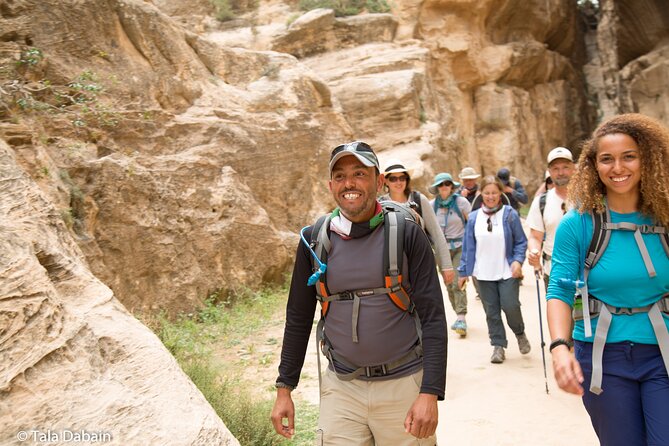
This trip sells itself on two ideas that hikers actually care about: time on your feet and time away from the biggest crowds. The trek starts in Dana Nature Reserve and uses trails shaped by local movement, not just marked tourist routes. With a group limited to 14, you get the benefits of guidance while still feeling like the landscape is yours for a while.
Then comes Petra. Instead of funneling everyone into the usual arrival paths, you enter through a lesser-used Nabataean route often referred to as The Back Door. The practical payoff is pacing. You start your Petra experience with walking down Wadi Ghurab, moving through sandstone approaches and terraces, and reaching viewpoints before the crowds fully stack up.
I also like that this route mixes major sites with lesser-known ones. Little Petra is not the main headline like Petra, but it is close enough to feel connected and different enough to feel like a bonus. You get the Cold Canyon approach, narrow sandstone stairwork, and a sense of how the Nabataean world extended beyond the postcard scenes.
The tradeoff? Quiet routes still mean you are walking a lot. You are trading busier sightlines for longer days and more physical work. If you want a few big moments with minimal effort, this is not that.
Amman first, then back out into the hills
Day 1 is intentionally light. You land in Amman, check into your hotel, and ease into Jordan with time for downtown wandering and Jordanian cuisine. Amman is old, yet it feels modern, and the plan gives you space to adjust to your flight rather than rushing straight into a boot-on-the-ground schedule.
You also get a clear handoff: pickup for the trek happens the next morning after breakfast. The drive from Amman to Dana is about 2.5 hours, which is not short, but it is enough time to settle in, meet your group, and mentally shift from city pace to trail pace.
On the back end, Day 9 returns you to Amman downtown. The trip ends back at the meeting point, and the practical note is to plan your departure timing carefully. If you are flying out, leave Amman with a cushion so you are not doing last-minute stress math.
This is one of those itineraries that respects jet lag and logistics. It is not a party schedule, and it is not a rushed checklist. It is built around walking days that start early and end late.
Dana Nature Reserve days 2 to 4: long hikes, real elevation, and real support
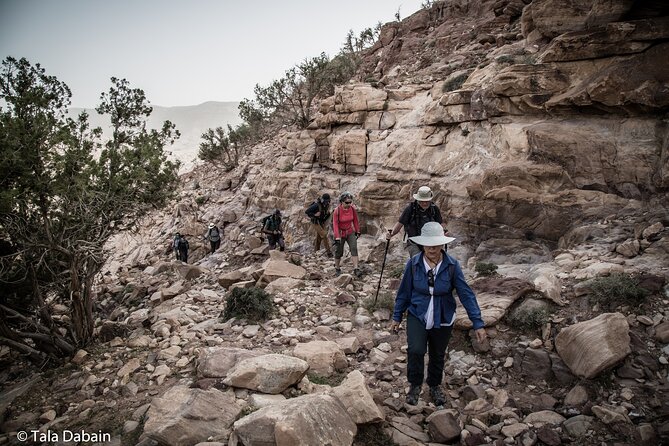
Day 2 is where the trek starts for real. After breakfast, the group is picked up at about 7:30 am and heads into Dana Biosphere Reserve. You hike through varied ecozones, with a first leg along mountains above Dana Valley and then a descent into al Khashasha Valley. You finish at a wilderness campsite in Mansoura, outside the valley.
The numbers matter. Day 2 is about 15 km with an ascent of about 260 m and a descent of about 690 m, and it lists 5 to 7 hours of hiking time. This is not a gentle walk. It is also not an all-day scramble for the entire time. You get a long, steady effort with time to break and refuel.
Day 3 adds a different kind of challenge. You hike toward Furon, climbing through the mountains and getting a big view of the Sharah Mountains and the Wadi Araba Desert. The hike is about 16 km with about 563 m ascent and about 170 m descent, again around 5 to 7 hours of hiking. It is a day that can feel like a constant uphill push, then more gradual coming down.
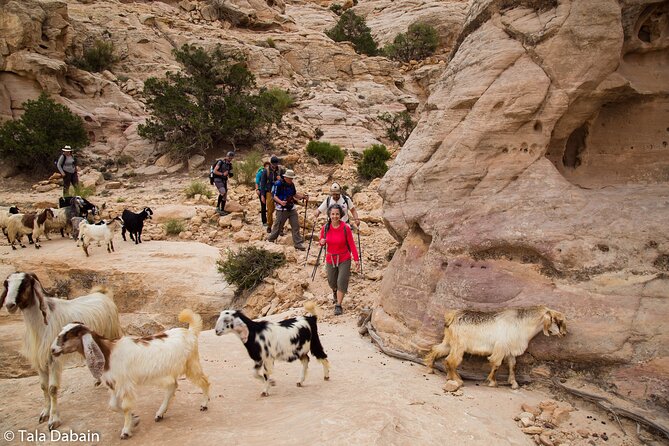
Day 4 is often the day that sorts the serious walkers from the casual ones. You hike along Ras Al-Feid and toward Ghbour Whedat through wild corners of the reserve. The route uses smaller Bedouin shepherd paths that contour the Sharah Mountains, with rugged black mountain peaks above and canyon drops below. You are also looking for visuals here: the terrain shifts, and mushroom-like rock formations line parts of the way.
Day 4 is about 17.1 km with roughly 750 m ascent and about 920 m descent, with around 12 hours on the day schedule. It is a lot of moving time and a lot of altitude change.
Two support pieces make these days feel manageable rather than scary. First, the trip includes an English-speaking licensed guide on days 2 to 8. Second, on days 2 to 4 you have a local hiking guide plus a donkey for safety measures. That means the team is set up for rougher terrain and practical issues, not just sightseeing.
If you train for hills and can handle long walking days, you will feel a lot better. If not, you will pay for it. This is why the trip notes a strong fitness level.
Little Petra via Al-Beidha: Nabataean ruins, Cold Canyon stairs, and a day that rewards patience
Day 5 is a turning point. After a more remote feel from the reserve, you see signs of increasing human presence as you approach Little Petra. The route passes Bedouin camps, sheep pens, and small agricultural plots, which helps you understand the living side of Jordan, not just the postcard side.
You also pass early Nabataean ruins, including wine and olive presses, aqueducts, and other ancient water infrastructure. That detail is practical. It turns the landscape into a story about how people made life work in dry places.
Then comes the signature arrival: you climb through a canyon walled with soft sandstone and then descend into Little Petra via a narrow, steep flight of stairs. Archaeologists describe Little Petra as a suburb of Petra, and the site is also known as Siq al-Barid, the Cold Canyon.
I love days like this because they tend to feel more relaxed than the heavy main-site days. You are still moving and still working your legs, but you are not dealing with the same congestion you might expect in bigger attractions. You are also getting a visual “warm up” for Petra itself, since the Nabataean style and engineering concepts show up again.
The drawback is that steep stairs can be hard if you have any knee issues or you are not used to downhills. Bring your walking pace down a notch on stairwork and let the guide set the rhythm.
More of Wadi Rum, from two hours to two nights
- 2-Day Petra, Wadi Rum and Dead Sea Tour from Amman
★ 5.0 · 467 reviews - 3-Day Private Tour from Amman: Petra, Wadi Rum, Dana, Aqaba, and Dead Sea
★ 5.0 · 425 reviews - Amman: Petra, Wadi Rum, and Dead Sea 2-Day Tour
★ 4.8 · 213 reviews - Full-Day Private Trip To Petra, Wadi Rum
★ 5.0 · 186 reviews - From Amman: Petra, Wadi Rum and Dead Sea 3-Day Tour
★ 4.9 · 185 reviews
Petra on day 6: The Back Door route to the Monastery viewpoint
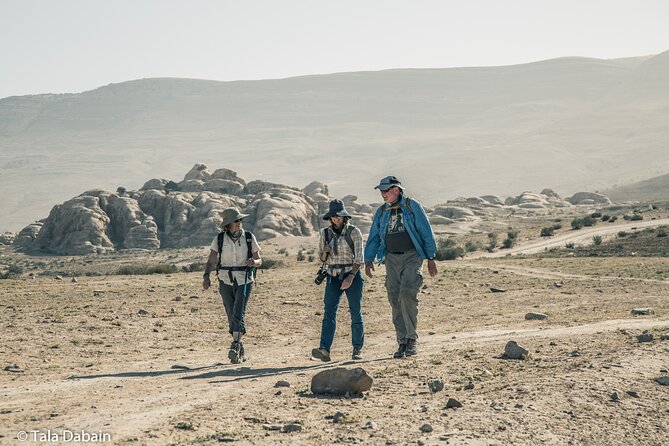
Petra day starts after breakfast, with an approach designed to reduce time in the densest areas. You enter via The Back Door, following good tracks down Wadi Ghurab. The walking feels like a sequence of controlled sections: sandstone mountains guarding the approaches, then a Nabataean route that skims around the final mountain on a natural rock terrace that has been improved for walker safety.
This part is not just scenic. It changes how Petra feels. Instead of hitting the site like a stampede, you arrive with more time to read the space. You also reach a hidden plateau high above the impressive chasm of Wadi Siyyagh.
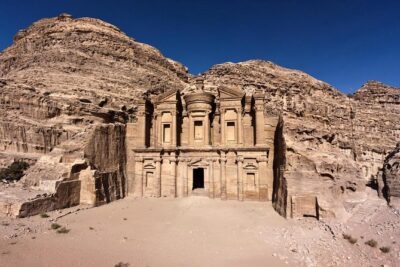
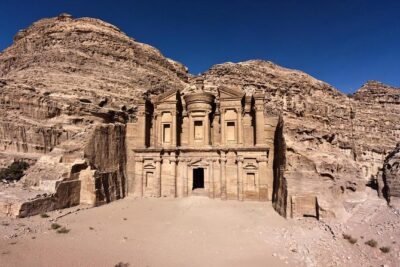
Then the Monastery shows up carved into the cliff face. It can feel sudden, like the site is revealing itself in stages rather than throwing everything at you at once. There is a Bedouin café for refreshments if you want a break before continuing.
If you plan your day well, this is one of those “I get it now” Petra moments. You see Petra as a set of routes and levels, not just one famous entrance corridor.
The consideration here is that Petra is still Petra. Even if you take a quieter approach, the day runs long (it is listed as 12 hours). You will want sturdy footwear and a willingness to take breaks before you get tired. Also remember that entry to Petra is tied to the Jordan Pass, which is not included in the tour price.
Wadi Rum day 7: 4×4 safari, sand dunes, and tea under stars
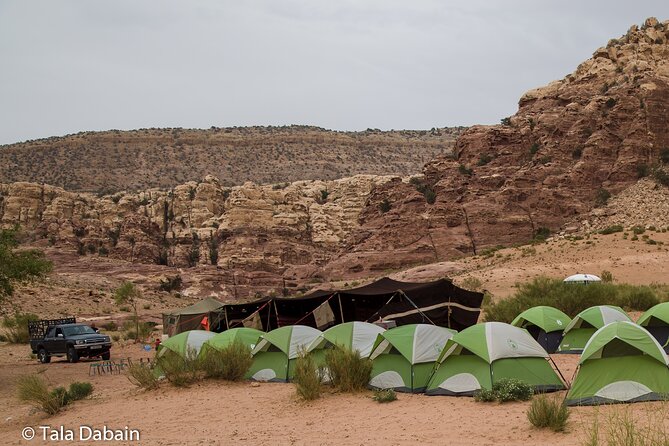
Day 7 shifts from hiking intensity to desert motion. After a relaxed breakfast, you leave Petra’s mountains and head to Wadi Rum. The plan includes meeting Bedouin hosts and then going out on a 4×4 jeep safari to explore valleys and narrow gorges.
During the safari you can discover ancient rock inscriptions, climb sand dunes, and explore rock bridges. You also get time to hike, scramble, and explore at your own pace. That means the activity is not one long drive with no choices. You can do the more active bits when you want, and step back when you need a breather.
Then comes the part people remember most: sunset. The itinerary explicitly calls out one of the most magical sunsets in the world, followed by returning to your camp for dinner and Bedouin hospitality. After that, you sleep under a starlit sky and enjoy countless cups of tea.
This day is a useful reset after several trekking days. You still move, but it feels less punishing. It is also one of the most atmospheric parts of the trip, because the day ends with quiet time rather than another long scheduled push.
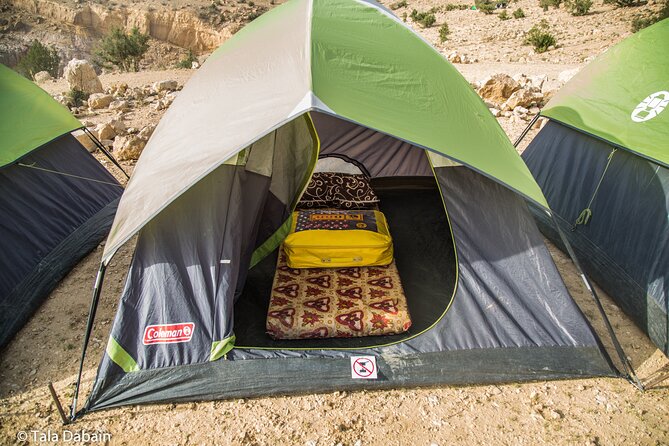
The only real caution is logistics of comfort. You are sleeping in a Bedouin camp, and while that is part of the appeal, it is not a resort room. If you pack for night chill and want simple routines, you will enjoy it more.
Dead Sea on day 8: floating, mud, spa options, and a real sore-leg breather
Day 8 is a recovery day built into the itinerary. You head to the Dead Sea, described as the lowest point on earth. The schedule gives you time to float in the salty waters, try Dead Sea mud, relax by the pool, and even pamper yourself with spa treatments if you want.
This is not just relaxation for the sake of it. After days of walking, your legs will feel it. The Dead Sea segment is an intentional payoff: salt water buoyancy plus mud time can be exactly what you need before your final night back in Amman.
In the late afternoon you hop on the bus and follow the long winding road back to Amman. Day 9 is then your final return to downtown for departure.
The main consideration is time and energy. Even if you feel better in the water, don’t plan to turn it into an all-day party. Let it be what it is, a reset so you can enjoy the final transition without feeling wrecked.
Price and value: why $1,595 can be fair for what you get
At $1,595 per person, you are paying for a multi-day package that includes a lot of moving parts that hikers normally assemble themselves. Here is where the value shows up.
What is included: 8 nights of accommodation, an English-speaking licensed guide on days 2 to 8, a local hiking guide plus donkey support on days 2 to 4, transportation as per the itinerary, and luggage transfers by pickup truck. Meals are also built in: breakfast is included 8 times, lunch is included 7 times, and dinner is included 6 times. You also get pre-arranged tented accommodation during the trek.
That matters. You are not just paying for a map. You are paying for logistics handled for you while you focus on the walking. Small-group limits to 14 also reduces the chaotic feel common on bigger treks.
What is not included: the Jordan Pass, which covers visa and entrance fees. That can be a big budget line, especially for major sites like Petra. Tips are also not included, along with travel insurance, airfare, and personal expenses. Hiking gear is on you too, so plan for boots, layers, and sun protection.
My practical suggestion: budget for the Jordan Pass early so you do not get surprised later. If you already have a compatible pass, great. If not, it is worth pricing it into your total trip cost.
Who this trek suits best, and who should pause before booking
This is for people who like structured hiking, not just casual sightseeing. The itinerary includes strong daily walking, steep downhills, and at least a couple of nights sleeping in tents or Bedouin camp settings. If you are willing to put effort into the trek, the reward is a Jordan route that feels like a real journey.
It is also a great fit for solo walkers who want company without losing freedom. In the tour feedback, solo female travelers highlighted that the group stayed together but still allowed space to move at your own pace. That is a key point. With a small group, you can have both social energy and breathing room.
The tour also seems to perform well because of guide quality. Named guides in the feedback include Motaz Zghoul and Mutaz Jarrar, both praised for being reliable, attentive, and good at creating a friendly atmosphere. Operations support also shows up in the stories, with people calling out Shushan for helping with pre-trip questions.
Who might think twice: anyone with mobility limitations around long walking days or steep steps, especially on day 5 into Little Petra. Also consider whether you want a lighter schedule. This trip is designed to keep momentum, not to slow down into short, easy walks with lots of spare hours.
Should you book Dana to Petra plus Wadi Rum and the Dead Sea?
Book it if you want a Jordan trip that is built around walking routes, quiet Petra access, and a strong balance of effort plus recovery. The Dead Sea day is a real benefit when your legs need a reset, not just a random add-on.
Don’t book it if your idea of vacation is mostly downtime, because the trekking days are long and the hiking is the main event. Also factor in the Jordan Pass and entrance fees, since they are not included.
My quick decision checklist
- You can handle long hikes and early mornings
- You want less Petra crowd pressure via The Back Door approach
- You do not mind tented nights and a Bedouin camp stay
- You are okay budgeting extra for the Jordan Pass
FAQ
How many days of the trip are active hiking?
The active days are days 2 through 8, which is 7 days of trekking, jeep safari, and the Dead Sea stop. Days 1 and 9 are arrival and departure time in Amman.
What is the maximum group size?
This tour has a maximum of 14 travelers.
Who guides you on the trek?
There is an English-speaking licensed guide on days 2 through 8. On days 2 to 4, there is also a local hiking guide with a donkey for safety measures.
What’s included in the price for food and lodging?
Accommodation for 8 nights is included, along with breakfast 8 times, lunch 7 times, and dinner 6 times. Tented accommodation during the trek is pre-arranged.
Is the Jordan Pass included?
No. The Jordan Pass, described as Jordan Wanderer covering visa and entrance fees, is not included.
What do you do in Wadi Rum?
You do a 4×4 jeep safari with time to explore valleys and narrow gorges, see ancient rock inscriptions, climb sand dunes, and visit rock bridges. You can also hike or scramble at your own pace.
What do you do at the Dead Sea?
You have time to float in the salty waters, try Dead Sea mud, relax by the pool, and you may also choose spa treatments.
More Days on the Salt Shore
Still in Wadi Rum
Petra, Three More Ways
Fresh off the review desk
- Queen Alia Airport Transfers From / To Amman, Petra, Dead Sea.★ 5.0 · 3 reviews
- NEOM Saudi Arabia Transfer from AMM Airport or Aqaba Airport AQJ★ 5.0 · 3 reviews
- From Amman to (Aqaba, Wadi Rum and Petra)★ 5.0 · 3 reviews
- Transfer Amman To/From Petra★ 5.0 · 3 reviews
- Private Tour: Jerash and Umm Qais Day Trip from Amman★ 4.0 · 3 reviews
- Private Half-Day Ma’in Waterfalls and Hot Springs Tour from Amman★ 5.0 · 3 reviews
Petra Tours, compared.
 ★ 4.9Petra, Wadi Rum, and Dead Sea 2-Day Tour1,173 reviews
 ★ 5.02-Day Tour: Petra, Wadi Rum, and Dead Sea from AmmanFrom $2491,141 reviews
 ★ 4.9Petra & Wadi Rum Private or group Day TourFrom $126750 reviews
 ★ 5.0Petra and Wadi rum Full day TourFrom $99538 reviews
 ★ 5.02-Day Petra, Wadi Rum and Dead Sea Tour from AmmanFrom $275467 reviews
 ★ 5.03-Day Private Tour from Amman: Petra, Wadi Rum, Dana, Aqaba, and Dead SeaFrom $349425 reviews
 ★ 4.9Petra Full-Day Private Tour from AmmanFrom $78392 reviews
 ★ 4.9Petra & Wadi Rum: Full Day Private Tour with Hotel PickupFrom $133310 reviews
Browse the lists this tour appears in