
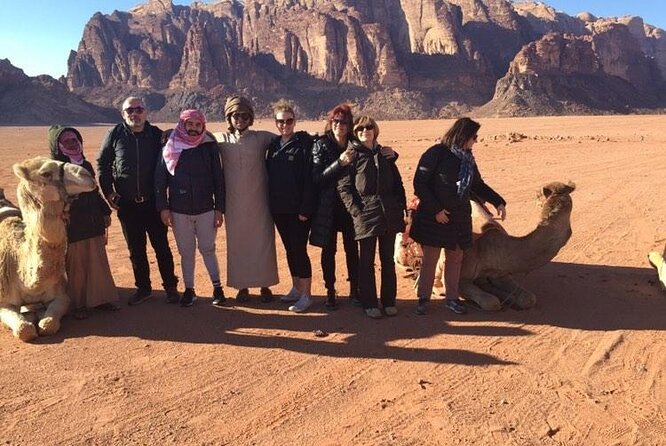
REVIEW · BEDOUIN CAMPS AND DESERT OVERNIGHTS
4 hours Jeep tour with overnight
The desert gets quieter after the day crowds. This overnight 4WD Jeep tour in UNESCO Wadi Rum pairs a welcome tea in Ahmed’s home with a proper night in a Bedouin camp, including dinner and breakfast. The main consideration is that desert nights can get cold, even though blankets are provided, and the tour depends on good weather.
You spend a big chunk of your day in a Jeep, hitting standout sites like Nabatieh temple, Mount Khazali inscriptions, and springs such as Lawrence spring and train spring, then you slow down for camp life. The full experience runs about 8 to 12 hours (approx.), with a maximum group size of 30, so you get the desert without feeling like you’re stuck in a huge bus line.
In This Review
- Key highlights worth planning around
- Wadi Rum after dark, the part most day trips miss
- First contact in Wadi Rum village: tea with Ahmed
- The 4WD safari: Nabatieh temple, inscriptions, dunes, and springs
- Bedouin camp night: dinner, music, and the cold-weather reality
- Sunset at the mother of Sabet: timing and what to expect
- Breakfast and the ride back to the village
- Price and value: is $200 a fair deal for this night?
- Logistics that matter: meeting point, timing, and staying comfortable
- Should you book this Wadi Rum overnight Jeep tour?
- FAQ
- How long is the Jeep tour with overnight in Wadi Rum?
- What is included with the overnight at the Bedouin camp?
- How much does the tour cost?
- What kinds of places does the 4WD tour visit?
- Where does the tour start and end?
- Is the tour limited to a certain group size?
- What happens if the weather is bad?
Key highlights worth planning around
- Tea at Ahmed’s house: a warm village welcome that sets the tone before the engines start.
- UNESCO Wadi Rum by 4WD: you reach spots that are hard or impossible without a Jeep.
- Iconic stops on one circuit: Nabatieh temple, Mount Khazali inscriptions, sand dunes, and multiple springs.
- After-day-visitor quiet: you stay out in the desert once the day crowd is gone.
- Dinner, music, and star time: a real Bedouin camp evening with blankets for the night chill.
- Sunset from the mother of Sabet height: a specific viewpoint that locals rate as the best for sunset.
Other jeep runs across the sand
Wadi Rum after dark, the part most day trips miss
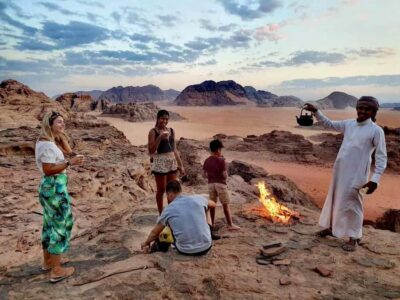
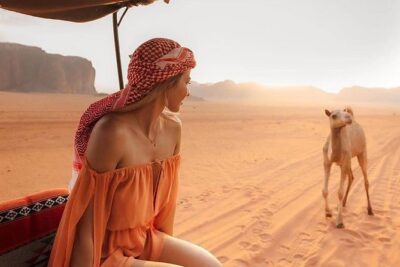
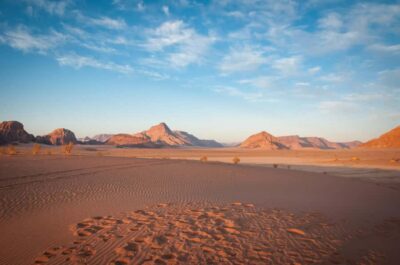
Most Wadi Rum visits are daytime drives and quick photo stops. This one is built for the other half of the story, the hour when the light changes and the silence gets real. You arrive, do your Jeep circuit, then settle into camp. By the time the day visitors are gone, you get the desert in a slower rhythm, with the night sky doing most of the work.
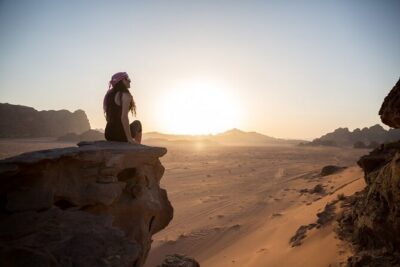
What I like about this setup is that it does not treat the overnight as a simple add-on. Dinner and breakfast are included, and the camp evening gives you time to actually rest, not just transfer from one vehicle to another. You also get time to see sunset from a designated high point called the mother of Sabet. If you’ve ever seen desert sunsets online, you already know the colors can be dramatic, but there’s also that extra calm you only get when you’re not rushing to beat another group.
The main tradeoff is practical: you should dress for cold. Even with blankets at camp, you’ll want real warm layers for the evenings. And since the experience requires good weather, you should expect that the desert can have a say in your schedule.
First contact in Wadi Rum village: tea with Ahmed
The tour begins with a welcome tea in Ahmed’s house in the village of Wadi Rum. This is one of those details that changes the whole feel of the day. Instead of meeting directly at a vehicle and getting shoved into “tour mode,” you get a human start, plus a sense of how local hospitality works.
Ahmed’s name comes up again and again in the stories you can read from past visitors, and the pattern is consistent: friendly, attentive, and good at setting expectations. People also mention flexibility, which matters more than you might think in Wadi Rum. If the light changes fast, or you want extra time at a viewpoint, it helps when your guide can shift the pace rather than stick rigidly to a script.
This is also the moment to think through your own priorities. Are you here for the big photo spots, or do you care more about the quiet camp evening? Either way, the tea welcome is short, but it gives you the mental “pause button” before the Jeep heads out.
The 4WD safari: Nabatieh temple, inscriptions, dunes, and springs
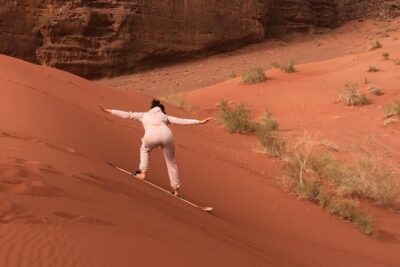
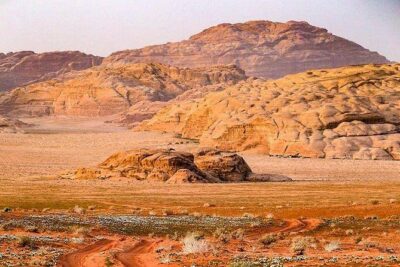
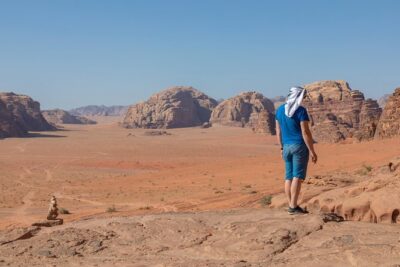
The core of the day is a guided Jeep safari through Wadi Rum, designed specifically to reach places that regular roads do not serve. You’ll visit a mix of rock formations, springs, and named sites, including Nabatieh temple, sand dunes, and Mount Khazali with its inscriptions.
Here’s why these stops matter, not just as checkboxes:
- Nabatieh temple: It’s one of the stronger “human in the desert” stops on the route. Even if you don’t know the details, seeing a temple site in this environment gives context to why Wadi Rum drew people over time.
- Mount Khazali inscriptions: This is the kind of place that rewards slowing down for a minute. If you like reading rock carvings and figuring out what you’re looking at, this is your moment.
- Sand dunes and spring points: Springs are practical story anchors in a dry place. When you see a spring area in Wadi Rum, you get an instant sense of how water shaped movement and life here.
- Lawrence spring and train spring: These names stand out because they’re specific. They also help you navigate what you’re seeing so you don’t end up with a blur of “cool rocks” and no mental map.
You’ll spend about 2 hours on the highlighted desert tour portion (and the full day tour timing adds up to the 8 to 12 hours window). A common theme in the experiences shared by previous groups is that the pace often feels unhurried, with enough time at key stops to take photos and actually look, not just point and go.
One more practical note: Jeep days can be bumpy. If you’re prone to motion sickness, pack what you use at home. Also, bring sun protection because Wadi Rum can hit hard when the sky is clear.
Bedouin camp night: dinner, music, and the cold-weather reality
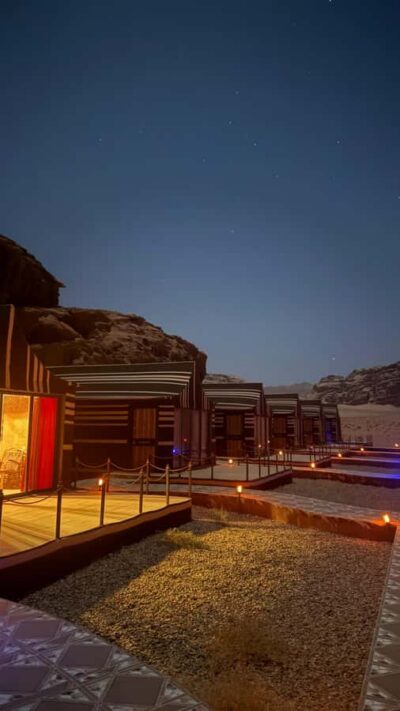
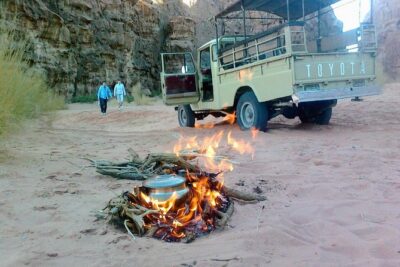
After the safari, you arrive at a Bedouin camp where you can relax with traditional Bedouin food and music. This is where the overnight earns its keep. The included dinner is not just “something to eat.” People describe it as good, authentic, and part of the camp atmosphere. There’s also a theme of comfort and care, with blankets mentioned because the night can be cold.
The camp evening is also your chance to experience what desert quiet really sounds like. One of the most repeated details is the silence, plus the way wind and water shape the rock forms over time. Even if you don’t plan to do anything else that night, you’ll likely end up staring at the sky longer than you intended. Reviews highlight star viewing, and that matches what usually happens when you’re away from city lights.
Music and a more social camp vibe are part of the evening, too. If you like chatting with the guide while the fire is going, it’s usually a friendly setup.
What to plan for yourself:
- Warm layers for after dark. Blankets help, but they are not a substitute for real winter clothing if you run cold.
- Bring a small headlamp or flashlight. Not required, but it makes late-night tent movement easier.
- Keep your phone power in check. You’ll want photos at sunset and stars at night.
Where else you can sleep out there
- Wadi Rum: Bedouin Camp Stay,Full-Day Desert Tour with 3Meals
★ 4.9 · 198 reviews - Full Day Jeep Tour with Overnight in beduin Camp Stay! (All Meals Included)
★ 5.0 · 136 reviews - Wadi Rum Jeep Tour & Camp; Overnight
★ 5.0 · 41 reviews - Best of Wadi Rum | Full day jeep tour + overnight in bedouin camp | Pack all-in
★ 5.0 · 41 reviews - Wadi Rum Full Day Jeep Tour – Stargazing Overnight in a Cave – Traditional Food
★ 5.0 · 38 reviews
Sunset at the mother of Sabet: timing and what to expect
Sunset is a major moment on this experience, and it has a specific recommended spot: the mother of Sabet height. Having a named viewpoint matters because it reduces guesswork. Instead of hoping you’ll find a good angle at the right time, you know where the best sunset view is expected.
In a desert setting, sunset photography can look easy until you’re actually standing there and realizing the light moves fast. That’s why you should show up ready, camera set, and layers on so you’re not rushing when the temperature drops.
If you’re sensitive to cold, keep in mind that sunset timing often comes with a quick shift from warm sun to crisp air. Many people remember the contrast: bright reds and golds, then the quiet night that follows.
Breakfast and the ride back to the village
The next morning, you’ll have breakfast at the camp, then return to Wadi Rum village. This is the kind of ending I like: you’re not yanked out before you’ve had time to wake up normally. Breakfast is included, so you don’t have to scramble for food right after a night in the desert.
The morning return is also a chance to see Wadi Rum with a different light than you had during the sunset. Even if the dramatic views are what drew you in, the morning light can make rock textures pop. You’ll still be in “Wadi Rum mode” right up until you’re back near the meeting point.
Price and value: is $200 a fair deal for this night?
At $200 per person, this is not a bargain-basement Wadi Rum experience. But the value stacks up when you look at what’s included:
- Overnight camp stay (not just a short stop)
- Dinner and breakfast included
- 4WD access to multiple named sites in Wadi Rum
- A guided circuit that hits major points, including inscriptions and springs
In other words, you’re paying for the full day structure, plus the part day trips often skip, which is the time after the crowds leave. That’s exactly where the night sky and desert quiet can make the experience feel bigger than the number of stops.
Also, the tour mentions group discounts, which can help if you’re splitting costs with friends or family. The tour size is capped at 30, so it’s not the type of crowd scenario where you get lost in the group.
If you’re the kind of person who wants maximum comfort and zero surprises, just factor in that this is the desert, not a hotel. You’re exchanging amenities for access and atmosphere. If that trade feels right, the price starts making sense.
Logistics that matter: meeting point, timing, and staying comfortable
The meeting point is near Wadi Rum village, listed as سوبر ماركة ابو رياض, with the reference HCFF+G88. The activity ends back at the meeting point, so you’re not dealing with a complicated transfer chain.
The activity hours provided run Monday to Tuesday, 4:00 AM to 11:30 PM, which likely covers different start times depending on the date. Your tour timing is listed as 8 to 12 hours (approx.), and you’ll want to keep that block free in your Aqaba to Wadi Rum planning.
Finally, comfort and weather matter here:
- The experience requires good weather.
- The desert can be cold at night, and blankets are provided.
- Service animals are allowed.
- Most people can participate.
If you’re thinking about booking, make sure your clothing plans match the reality: bring warm layers for camp hours, plus sun protection for the Jeep portion.
Should you book this Wadi Rum overnight Jeep tour?
Book it if you want Wadi Rum to feel like a place, not a drive-through checklist. The big reason is the overnight structure, especially the chance to see the desert after day visitors leave, plus the included dinner and breakfast that make camp time feel real.
Don’t book it if you hate cold nights, hate uncertainty, or you’re only interested in quick daytime photos. Since the experience requires good weather, you also need to be flexible in your travel dates. If your schedule is tight and you cannot move plans, consider building in a buffer day around Wadi Rum.
If you do book, I’d choose it because of the combo you’re getting: Ahmed’s welcome tea, a guided 4WD circuit that includes Mount Khazali inscriptions and multiple springs, then a camp evening with blankets and a sunset viewpoint at the mother of Sabet height.
FAQ
How long is the Jeep tour with overnight in Wadi Rum?
The total experience runs about 8 to 12 hours (approx.), with an overnight at a Bedouin camp in Wadi Rum.
What is included with the overnight at the Bedouin camp?
Dinner and breakfast are included at the Bedouin camp, along with traditional food and music during the evening.
How much does the tour cost?
The price is listed as $200.00 per person.
What kinds of places does the 4WD tour visit?
The route includes stops such as Nabatieh temple, a spring, sand dunes, Mount Khazali (inscriptions), and springs including train spring. Lawrence spring is also mentioned in the experience details.
Where does the tour start and end?
It starts at سوبر ماركة ابو رياض, HCFF+G88, Wadi Rum Village, Jordan, and ends back at the same meeting point.
Is the tour limited to a certain group size?
Yes. This activity has a maximum of 30 travelers.
What happens if the weather is bad?
The experience requires good weather. If it is canceled due to poor weather, you’ll be offered a different date or a full refund.
Elsewhere on Jordan Insider
Nights Under Canvas
More Jeep Days on the Sand
Fresh off the review desk
- Wadi Rum Classic 4-Hour Jeep Safari★ 5.0 · 3 reviews
- WADI RUM: ALL DAY JEEP TOUR with overnight and full meals★ 5.0 · 3 reviews
- Wadi Rum 4-Hour Sunset Tour – Wadi Rum Desert Highlights★ 5.0 · 3 reviews
- 1 Day & 1 Night | Stay & Jeep + Camel Tour in Wadi Rum | Magic Bedouin Star★ 4.5 · 3 reviews
- Transfer from Aqaba Airport to Petra★ 5.0 · 3 reviews
- Petra Day Tour from Aqaba Port (Shore Excursion Petra) – JHT★ 5.0 · 3 reviews
Bedouin Camps and Desert Overnights, compared.
 ★ 5.0Wadi Rum Full Day Jeep Tour + Overnight & Dinner in Bedouin CampFrom $107368 reviews
 ★ 5.0Wadi Rum Cave Camping with Jeep TourFrom $126200 reviews
 ★ 4.9Wadi Rum: Bedouin Camp Stay,Full-Day Desert Tour with 3MealsFrom $39198 reviews
 ★ 5.0Full Day Jeep Tour with Overnight in beduin Camp Stay! (All Meals Included)From $95136 reviews
 ★ 4.9Wadi Rum: Guided Jeep Tour With Overnight Stay and MealsFrom $87101 reviews
 ★ 5.02-Day Private Tour from Amman: Petra, Wadi Rum Camp & Dead Sea.From $22047 reviews
 ★ 5.0Wadi Rum Jeep Tour & Camp; OvernightFrom $11841 reviews
 ★ 5.0Best of Wadi Rum | Full day jeep tour + overnight in bedouin camp | Pack all-inFrom $13341 reviews
Browse the lists this tour appears in